

Trade shows are a significant marketing investment for fashion businesses, so measuring ROI (return on investment) is essential. B2B companies need to validate their spend and assess the effectiveness of their in-person activities.
This guide explores how to calculate a trade show’s ROI and offers tips on which metrics to track and provides practical tools for improving ROI.
What is Trade Show ROI?
Definition & Meaning
Trade show ROI is a metric that measures how much value the event brings to a business, after costs are accounted for.
Tradeshow ROI = (New Revenues – direct Investment) ÷ Investment x 100%
Trade shows can bring value in different ways, some of which are not always easily measured. An increase in sales, closed deals, or new customers is a tangible metric that can be measured. In contrast, benefits such as brand awareness, media coverage, partnerships, and qualified leads are much harder to track.
Why Measuring ROI on Trade Shows is Critical for B2B Growth
Measuring trade show ROI helps justify event spend to leadership and enables teams to identify which shows are worth attending in the future easily.
ROI can also inform strategy for booth design, staff training, and lead follow-up to drive B2B growth. By collecting ROI data after every trade show, businesses can make continual improvements across events.
How To Calculate Trade Show ROI
Step-By-Step Formula
Follow these simple steps to work out the ROI for a trade show.
Calculate Total Investment Costs
Work out how much you invested in the event by totalling all your costs. Be sure to include booth space, travel, logistics, and accommodation fees; the cost of any design or copywriting work used in your marketing materials; and staff costs.
Determine Total Returns
Add together all direct sales and revenue from the event, as well as converted leads, even if the conversion took place after the show.
Apply the ROI Formula
Use ROI = (Net Profit ÷ Total Investment) x 100 to determine how successful the trade show really was.
How to Measure Trade Show Effectiveness Beyond The Booth
Lead Quantity & Quality
Not all leads are measured equal. Qualify leads by determining whether they are the right fit for your business and how strong their buying intent is to determine their true value. Remember, many valuable leads may need to be nurtured over a long period of time to build trust in your brand and its collections.
Sales Revenue Generated
Tracking revenue made directly from a trade show is a simple way to measure its value. The higher the sales, the greater the chance of success.
Booth Traffic & Engagement
The number of visitors to your booth, badges scanned, and meetings booked during the trade show are all strong indicators of success.
Cost Per Lead, Cost Per Conversion
Dividing total costs by the number of leads or conversions generated is a good indicator of trade show effectiveness, as it shows how much money is required to drive growth.
Brand Awareness Indicators
While it’s harder to measure their intrinsic value, social media engagement, online searches, and press mentions are important metrics to track.
Post-Show Follow-Up Metrics
Long-term ROI is influenced by follow-up timing. Too soon, and your message may be missed; too late, and they may forget who you are. Track how quickly leads are followed up on and how many meetings are booked to monitor progress.
Strategies for Improving Your Trade Show Return on Investment
- Define objectives before the show: Create SMART (Specific, Measurable, Achievable, Relevant, and Time-bound) goals for leads, demos, and sales.
- Engage pre-show audience: Send email campaigns and create social media posts to let buyers know you will be attending the event to create a buzz.
- Use tech tools to enhance engagement: Adopt badge scanners to streamline lead collection, send emails during the show to remind buyers to visit your booth, and utilize data dashboards at your booth to drive interest.
- Download the JOOR iPad app for trade shows to maximize sales: Give buyers access to your latest inventory updates and allow them to place their own orders at the show using the initiative app.
- Follow-up post-show: Be strategic with personalised follow-up calls and emails, and offer product demos to warm leads.
Common Mistakes to Avoid
When measuring trade show return on investment, there are a few pitfalls that can be easy to fall into. Many people ignore overheads or forget about hidden fees when calculating investment costs, while others only count immediate sales and do not factor in pipeline growth.
Both of these mistakes can throw a trade show ROI calculation off, so take care to consider these elements and even prep a trade show checklist to keep tabs on everyrhing invovled.
When counting leads, remember to qualify them first, as a cold lead is as good as no lead, and bolster your leads with a good follow-up strategy to maximize your ROI potential.
FAQs
What counts as a good ROI for a trade show?
Many businesses consider 100-150% ROI to be a strong metric of success, but this is not a hard and fast rule. For businesses taking part in their first trade show, this figure may be substantially lower, but other benefits, such as increased brand awareness and press mentions, may be increased, leading to eventual long-term success.
How soon should I measure ROI after a trade show?
It is worth waiting until you have as much data as possible before measuring a trade show’s ROI for the most accurate results. Metrics such as sales and the number of visitors to your booth can be calculated immediately after a trade show ends, but statistics around leads may take longer to collate, as you have to qualify them.
Can trade show ROI include non-sales results?
Yes, many businesses measure trade show ROI by taking into account results that improve brand awareness, such as social media and press coverage, alongside more traditional metrics like the number of meetings booked or leads generated.
Is measuring ROI the same for all industries?
No. Measuring trade show ROI for fashion differs from other industries as orders are usually placed at the show or soon after, in line with the fashion seasons, so orders placed are often a more important metric than leads generated. For high-end or luxury fashion brands, ROI may focus more heavily on brand awareness than sales, as building prestige is often more profitable than on-the-day sales.
Can small businesses track ROI the same way as large enterprises?
Yes, any fashion business can use the simple formula (New Revenues – direct Investment) ÷ Investment x 100% to measure trade show ROI.


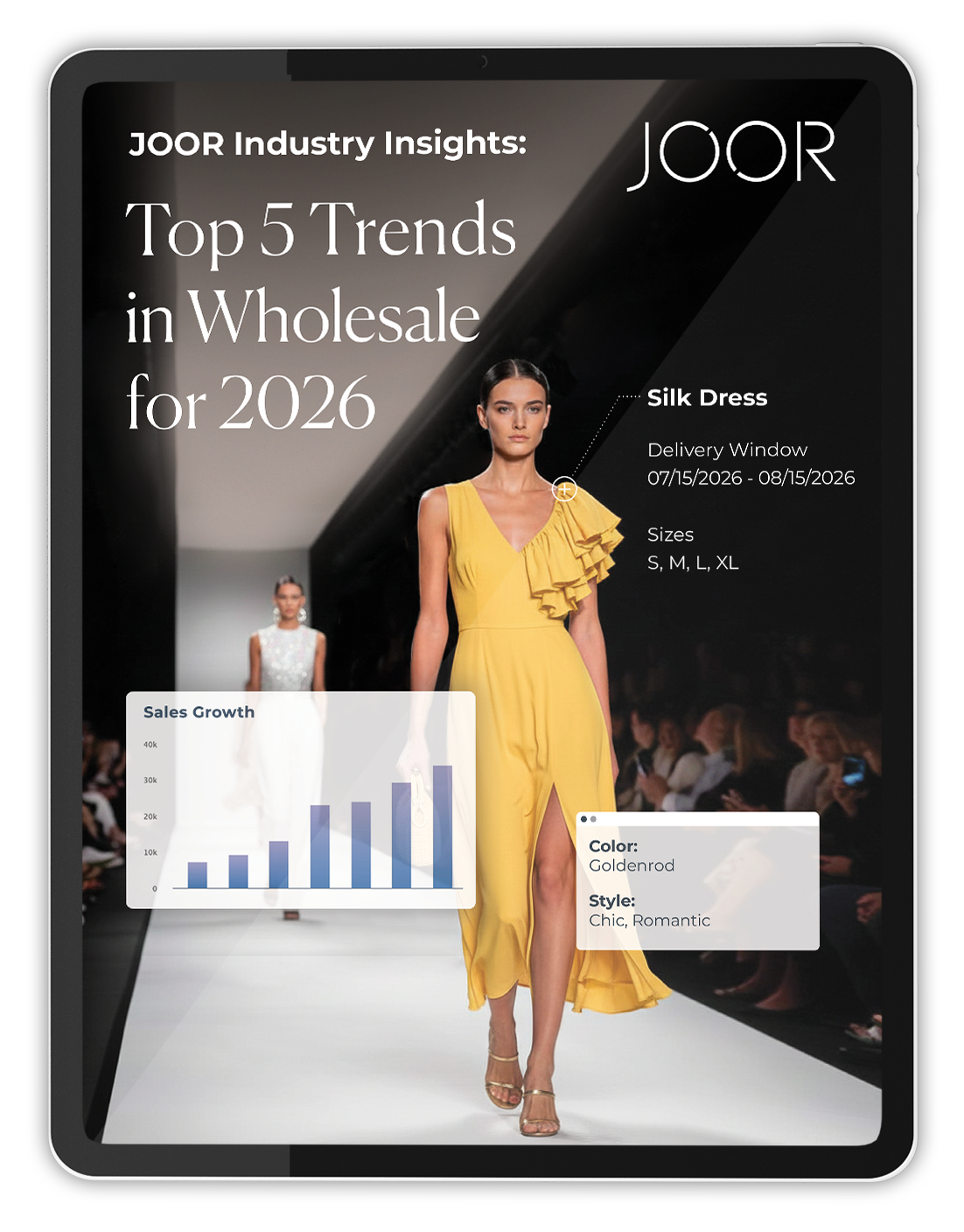
Discover the Top 5 Trends in Wholesale for 2026
Related Insights

How to Measure Trade Show ROI: A Complete Guide to Calculating Event Success
Learn the key metrics that will help you determine whether your in-person wholesale activities are a success and discover how to track long-term progress.
.png)
A Lookback on 2025 at JOOR
Reflect on the insights and innovations JOOR brought to the wholesale industry in 2025, from launching a new first-of-its-kind solution to expanding our global network of fashion brands and retailers.
Why Digital B2B Catalogs are Essential for E-Commerce Businesses
Online catalogs have become a crucial component for retailers and their buyers in an evermore tech reliant industry. Read about how these dynamic product libraries act as comprehensive selling solutions that plug into current buying behaviors.