.png)

Despite the digitization of many wholesale fashion processes, in-person events such as trade shows remain as important as ever.
JOOR’s 2025 Spring Market Survey revealed that 86% of buyers will be attending market appointments this season, and trade shows provide a unique opportunity for brands and retailers to have a real one-on-one connection. They allow buyers the chance to see and feel samples in person and often learn more about a brand directly from its founder or lead designer.
While trade shows offer exponential potential for growth, many brands fail to capitalize on in-person events effectively due to a lack of planning and a strategic approach. For the best chance of success, fashion brands should follow trade show exhibitor checklists to ensure they maximize their trade show potential.
The Pre-Fashion Trade Show Checklist
1. Choose the right show
2. Plan your budget and resources
3. Design and brand your booth
4. Select and train staff
5. Promote your attendance
On-The-Day Checklist
1. Set up your booth in good time
2. Engage with show visitors effectively
3. Capture as much data as you can
4. Coordinate your team so the booth is always managed
Post-Show Checklist
1. Evaluate metrics to measure success
2. Use a dedicated wholesale app to improve future performance
3. By completing all the tasks on these lists, you’ll see greater results and a tangible ROI.
Pre-Trade Show Planning Checklist
Trade show attendance can be extremely beneficial for brands. Here’s everything you need to do before you attend:
Choosing The Right Trade Show
Brands should carefully evaluate a trade show’s audience before deciding whether or not to attend. If a trade show does not attract a relevant target audience for your brand, there’s a low chance you’ll experience success.
Consider where the buyers you want to connect with typically go to discover new brands. Where can you exhibit to get your collection in front of retailers that would actually be interested in purchasing?
Create a shortlist of relevant trade shows and then take some time to review each one’s individual website, analyzing previous exhibitors and attendee profiles to see if they align with your target audience. When you have decided on a show, consider if it’s in your budget to attend and what the potential return could be for your brand.
Budgeting and Resource Planning
Find out how much it costs to have a booth at your trade show of choice, and consider how much sponsorship opportunities cost. Sponsoring an area like a wifi charging zone or a coffee truck can be a great way to increase brand visibility with minimal effort.
If you’d like to be more involved, see how much your show of choice charges for brands to be on panels, give talks, or have an experiential experience within the show that isn’t a traditional booth.
Think about your total budget for the show. Remember to include marketing materials and staffing fees in this number, as well as the cost of any travel and accommodation your team will require.
Booth Design and Branding

When selecting your trade show booth, size and location will affect not only your budget but also your chance of success. A larger booth in a high-traffic area is more likely to attract buyers’ attention, whereas a smaller booth in a quiet corner of the exhibition space will have reduced foot traffic and may be harder for buyers to find.
To help draw attention to your booth, use eye-catching brand messaging and signage that stands out from the crowd and can be read clearly from a distance.
Display your product in a unique but easy-to-browse setup, so that even if all your staff are busy and buyers are waiting, their attention is held by attractive samples and interesting displays, to reduce the chance of them walking away.
Consider if there are any product demonstrations you can plan, particularly for any intricate or unusual items that may need further explanation, and ensure your booth has enough room to facilitate this comfortably while also dealing with other queries.
Product and Marketing Collateral Preparation
Before a trade show, it’s essential to spend time ordering high-quality samples so buyers can get a true feel for how your collection looks and feels.
You should also ensure you have a clearly defined price list on hand, should buyers ask for it, and include QR codes to digital assets on all your marketing materials so brands can easily follow up with questions or order requests online after the show.
Staff Selection and Training
The right team can make or break a brand’s trade show booth, so think carefully about which employees should be your brand ambassadors at in-person events. The sales team may have great communication and negotiation skills, but members of the design team may be the ones with the best product and industry knowledge.
Take time to work out your team well in advance of the show and help to fill in any gaps in their knowledge so that they are all well-equipped to handle pitching, lead qualification, and query resolution.
Pre-Event Marketing and Promotion
When you are prepared for show day, it’s time to start marketing your attendance. This will help to drive traffic to your booth and start to build anticipation for the show.
Email all of the retailers and partners you have previously connected with and let them know you’ll be attending and where your booth is located, so interested buyers can schedule meetings in advance.
Post about your trade show attendance on social media, and make sure you are included on exhibitor lists and relevant apps for the trade show, to increase brand awareness and ensure your brand has the best chance of exposure to buyers who may not have engaged with you before.
On-The-Day Exhibition Execution Checklist
Now you’re ready for the trade show. Here’s how to make the most of in-person opportunities:
Booth Setup and Readiness
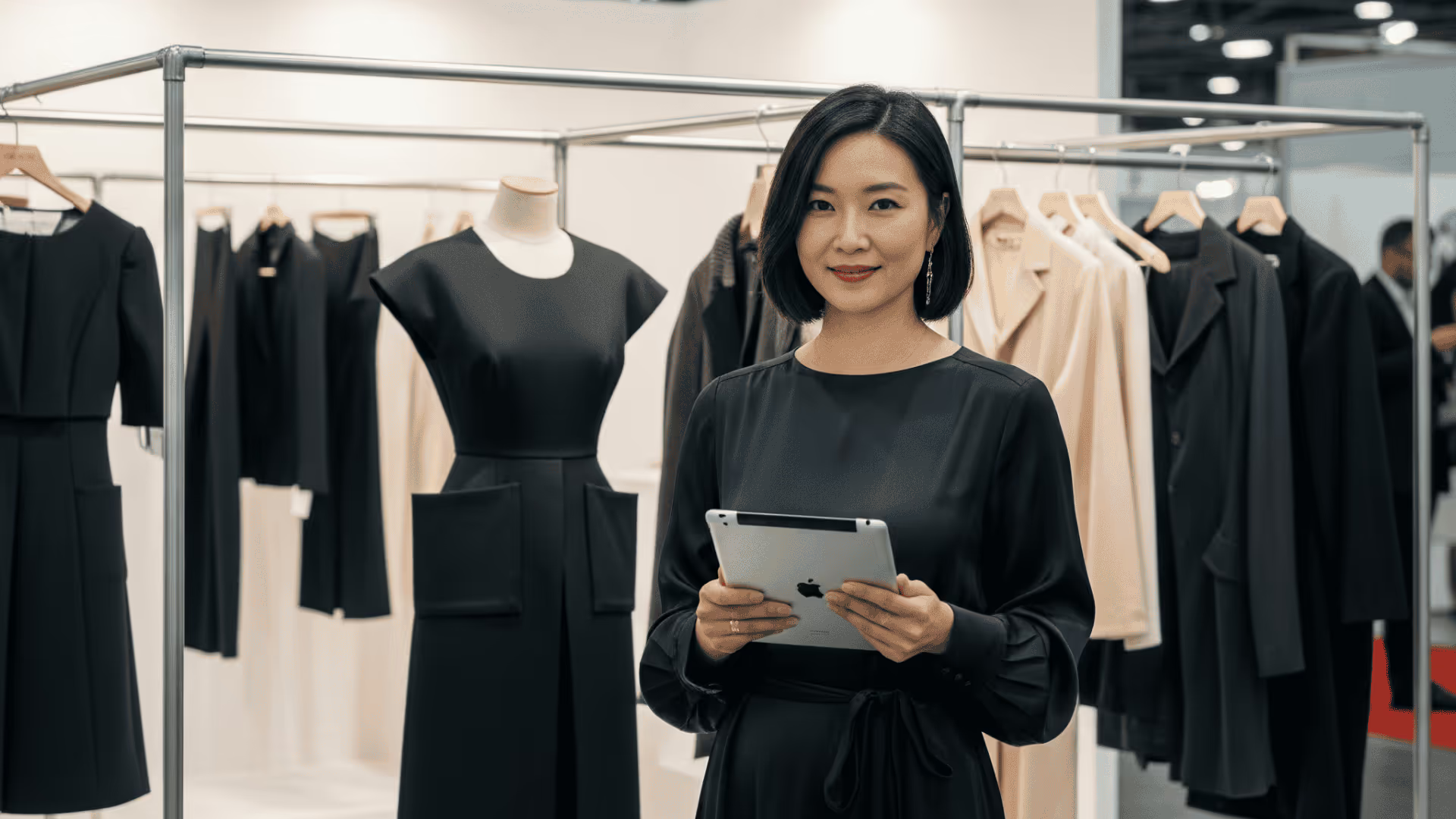
Arrive early on the morning of the trade show so you can set up your booth in good time and test the space accordingly if you plan on demonstrating product or allowing buyers to try on samples. If you have integrated digital tools like iPads, screens, or scanners into your booth display, check that these are all working correctly.
When you believe the setup is complete, take some time to clean the space to maximize your visual appeal.
Visitor Engagement Best Practices
When visitors approach your booth, it is important to always be friendly and polite. Ask qualifying questions so you can detect if they could be a useful connection for your brand, and take time to tell your brand story engagingly.
Buyers are likely having many conversations on trade show day, so try to be lively and engaging, without being too forward, to ensure you stand out. If they seem interested in your collection demo products and invite them to try on any pieces they would like, if you have the facilities to offer that.
Lead Capture and Data Management

Use digital tools to help capture leads, especially during busy periods. If a buyer doesn’t have a lot of time to chat, invite them to sign up to your mailing list using a tablet. This way, you can send them follow-up content after the show and improve your chance of getting a sale.
If a buyer is interested in placing an order but they don’t have time for an appointment, let them know that they can find your brand on the JOOR Orders app, so they can shop your linesheets and place an order at a later date that suits them.
Sending leads to digital tools allows you to categorize them by priority, so when you return to the office, your sales team knows who to focus on first post-show.
Team Coordination During the Event
To make sure the day runs smoothly, plan staff shifts and breaks so that your booth has ample support at all times and brand messaging stays consistently strong.
If the trade show spans over several days, have daily briefings at the start of each day with your team so they are aware of any goals or product updates, and check in at the end of each day to review performance.
Measuring Trade Show Success
Post-trade shows, it’s important to evaluate all the leads, sales, and conversions that your brand made so you can measure your actual ROI vs your goals.
As well as looking at how much brand exposure and engagement you achieved, reflect on the retailer connections you made. Follow up any in-person conversations by connecting online on social media like LinkedIn or a B2B wholesale network like JOOR to nurture your relationship further.
Think about what went well and what could be improved on. Have you learnt any lessons that could help you perform better at future exhibitions?
Tools and Technology That Improve Trade Show Performance
For the best chance of fashion trade show success, join a wholesale platform like JOOR so buyers can use tools like digital line sheets, virtual showrooms, and online ordering via a trade show app from your brand while at in-person events.
These will increase your chances of securing sales and make the trade show experience much more seamless for busy buyers.
Connecting your in-person experience to a B2B platform also makes it easy to extract data and analytics from an event, so you can create reports based on specific trade shows and send dedicated CRM campaigns based on your findings.
FAQs
How do I choose the right trade show for my business?
To choose the right trade show for your fashion brand, you should evaluate the event’s audience, the costs of participating, and the staff requirements needed to make the show worthwhile for your brand.
How early should I start planning for a trade show?
It’s never too early to plan for a trade show. As soon as the date of the event is announced, you can begin to think about creating your marketing materials and assembling the team who will man your booth.
What budget should I allocate for a trade show?
Every fashion brand’s trade show budget will be different. Thinking about the show’s potential ROI for your brand in terms of exposure and sales will help you to work out how much you will be willing to spend.
How can I attract more visitors to my booth?
To attract buyers to your booth, be sure to have eye-catching graphics that can be seen from far away, offer high-quality samples that buyers can try on, and give live product demonstrations so buyers can gain a deeper understanding of your collection.
How soon should I follow up after a trade show?
Follow up with buyers the day after a trade show while your brand is still fresh in their mind. They are likely to have many of your competitors who also attended the show reaching out during this time, so you must make an impact quickly post-show.

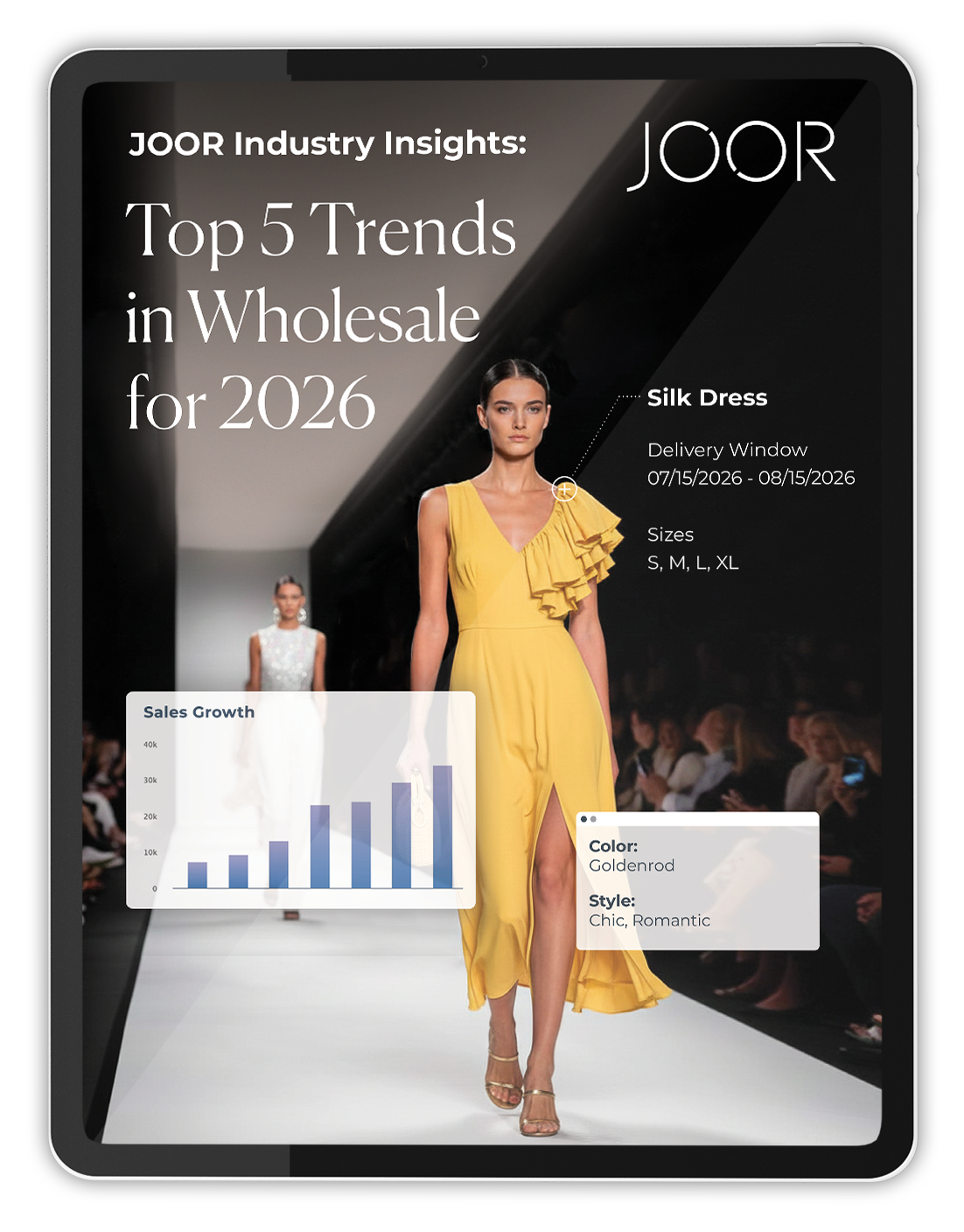
Discover the Top 5 Trends in Wholesale for 2026
Related Insights
How to Measure Trade Show ROI: A Complete Guide to Calculating Event Success
Learn the key metrics that will help you determine whether your in-person wholesale activities are a success and discover how to track long-term progress.
Why Digital B2B Catalogs are Essential for E-Commerce Businesses
Online catalogs have become a crucial component for retailers and their buyers in an evermore tech reliant industry. Read about how these dynamic product libraries act as comprehensive selling solutions that plug into current buying behaviors.
%2520(2)%2520(1).avif)
8 Ways a B2B Fashion Marketplace Solves Wholesale Scaling Challenges
Learn how a B2B fashion marketplace like JOOR helps your wholesale fashion brand overcome scaling challenges. Maximize resources, build retailer relationships, and enhance distribution to drive growth in the global wholesale fashion market.
B2B vs. B2C Fashion Marketplaces: Key Differences for Brands
Understand the key differences and similarities of B2B and B2C fashion marketplaces in this comprehensive guide. Compare their benefits and learn more about their unique offerings to help decide which avenue your fashion brand should pursue.
How a Trade Show App Can Make Selling Simpler
Learn how apps can help maximize your potential at trade shows by creating a seamless experience for brands and buyers, and making it easier to place orders and drive growth.
.avif)
Top 15 Fashion & Apparel Trade Shows in 2026 for Wholesale Buyers & Clothing Brands
Attending the right trade shows can drive growth and establish your brand in new markets. Learn how to maximize your trade show experience and discover events from around the globe.