B2B vs. B2C Fashion Marketplaces: Key Differences for Brands
Understand the key differences and similarities of B2B and B2C fashion marketplaces in this comprehensive guide. Compare their benefits and learn more about their unique offerings to help decide which avenue your fashion brand should pursue.


Brands looking to uplevel their distribution strategy may be confused about whether a B2B or a B2C fashion marketplace is better for their business. This guide will define both types of platforms and showcase their key benefits. It will also compare their similarities and differences regarding their ability to drive growth and increase revenue.
Brief Summary
Which Marketplace Model Is Right for Fashion Brands: B2B or B2C? If you’re looking to drive long-term revenue, own your pricing strategy, and build repeat retail relationships, B2B fashion marketplaces offer a clear edge.
- Revenue Impact: B2B channels are often brands' most profitable—more control, fewer discounts, and stronger margins.
- Customer Relationships: Unlike B2C platforms, B2B fosters long-term partnerships with tools for reordering, messaging, and personalized outreach.
- Scalability & Reach: B2B marketplaces provide access to global buyers and enterprise tools to grow alongside your brand.
What is a B2C Fashion Marketplace?
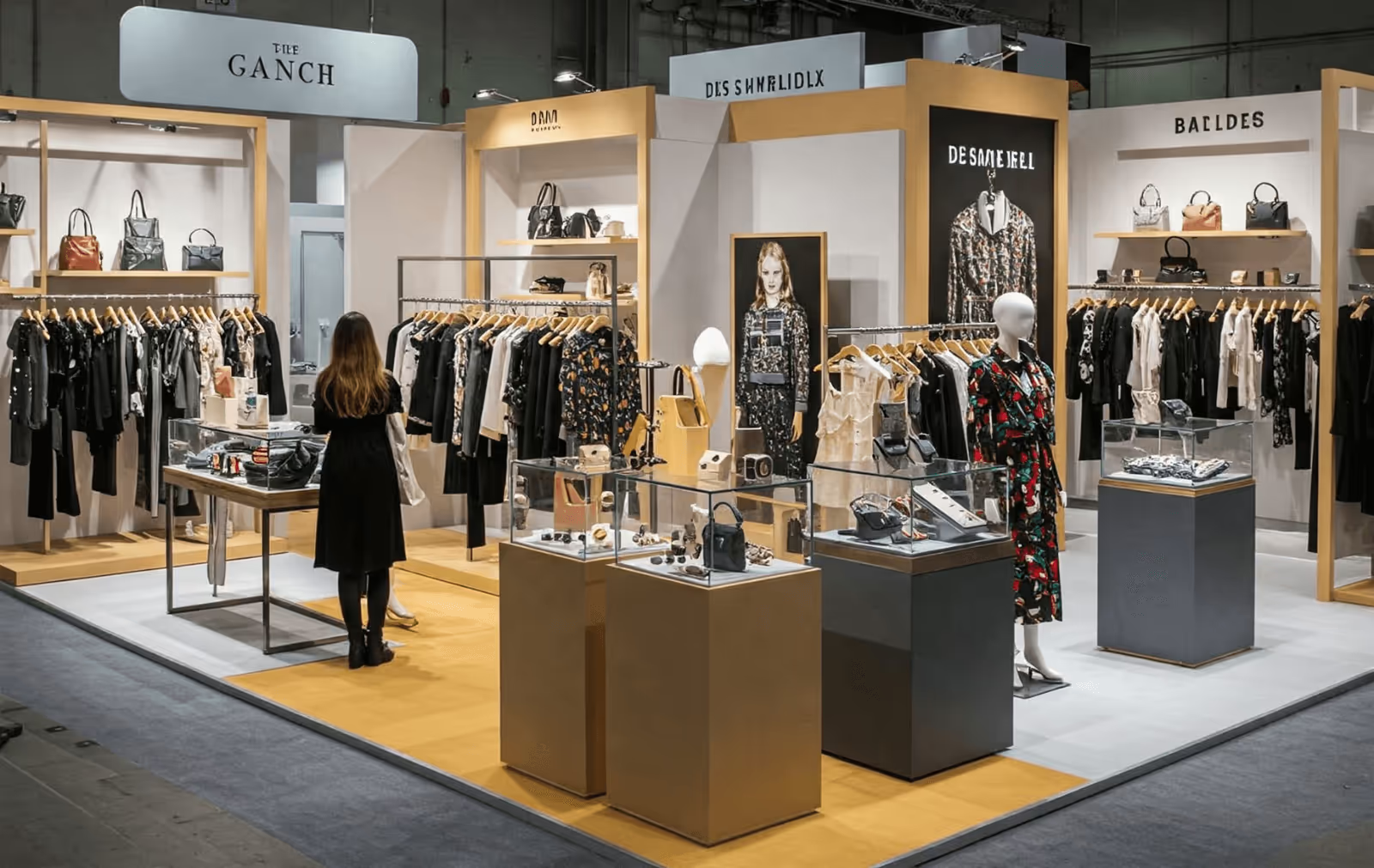
A B2C fashion marketplace is a platform where brands can sell product directly to end consumers. It allows shoppers to browse a large selection of brands at one time and often includes capabilities to filter by occasion, color and price. Some of the most well known marketplaces in this category include Amazon, AliExpress, ASOS and Farfetch.
According to a survey by BCG, B2C marketplaces account for 67% of global e-commerce sales today, a jump from 40% only a decade ago. For brands looking to increase their online presence and revenue from online sales, working with a B2C marketplace could be a path to achieving this.
What is a B2B Fashion Marketplace?
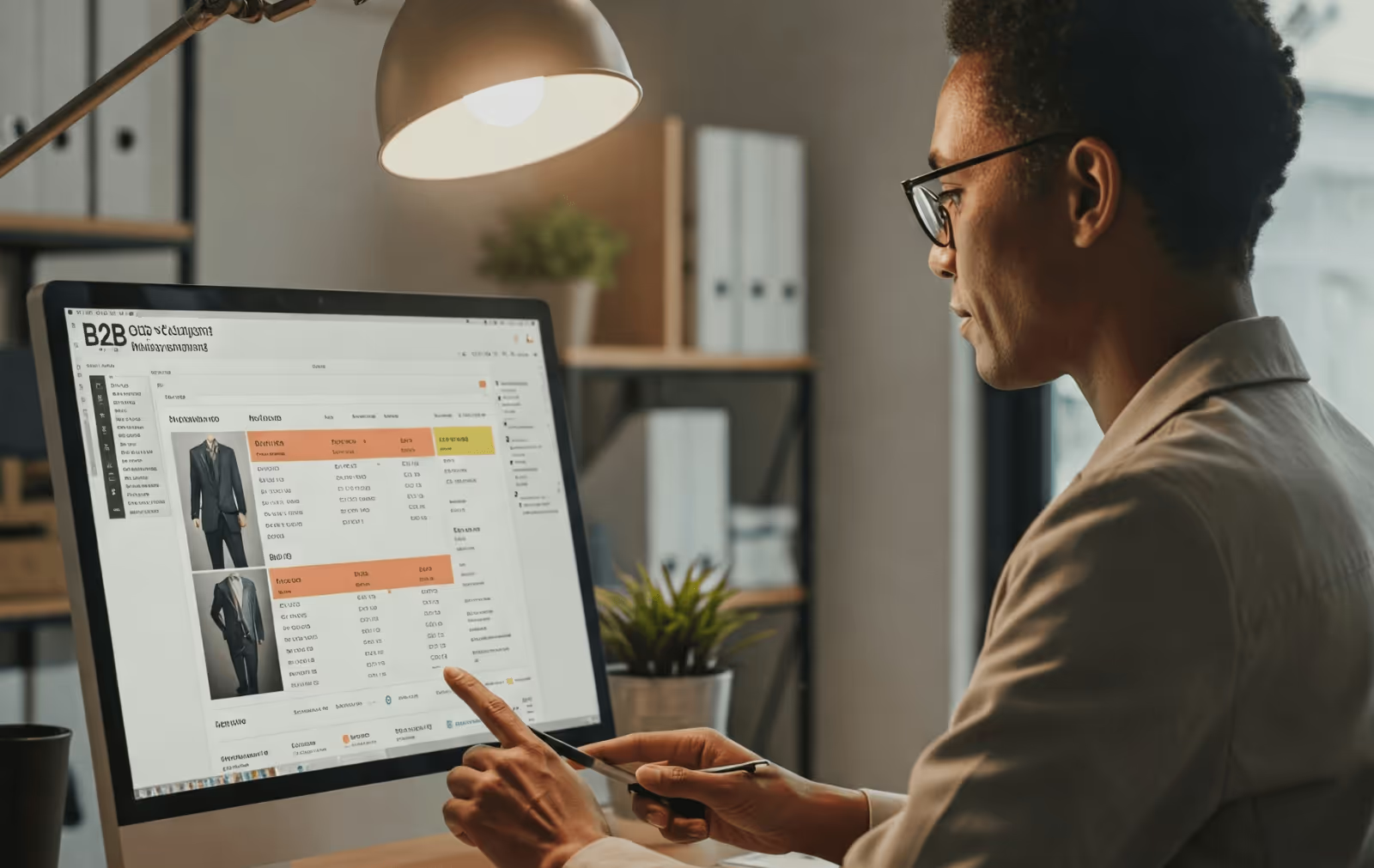
A B2B fashion marketplace is a platform used by brands to sell directly to fashion retailers. Designed specifically for industry professionals, the software on these platforms helps to facilitate interactions, purchases and payments between both parties.
Capital One Shopping research revealed the worldwide B2B e-commerce market to be worth an estimated $30.42 trillion in 2024, with projections indicating it will grow to $66.89 trillion in 2029. This highlights a growing trend towards digitalization that more and more buyers are adopting.
For brands looking to do business with retail industry power players and/or smaller independent boutiques, joining a B2B fashion marketplace is essential.
Target Audience: Who Buys on Each Platform?
B2C marketplaces are designed for individual shoppers interested in buying clothing for themselves. These platforms place a strong emphasis on fashion trends and personal style.
B2B marketplaces exist to help fashion buyers purchase stock directly from fashion brands. These platforms make it easier for both buyers and boutique owners to assess profit margins and grow their wholesale business.
Are There Any Similarities Between B2B and B2C Fashion Marketplaces?

Access to New Markets
Both B2B and B2C fashion marketplaces give brands the ability to access new markets and therefore more customers. Instead of making big investments in regions where they are unsure if their product will be successful, a marketplace can be a great way for brands to gauge interest in new locations with little risk.
Analytics
Brands that adopt either kind of fashion marketplace will be taking another step towards the digitization of their wholesale process. By doing so, they’ll be able to gain access to analytics on consumer behaviour and their product, and this data can be incredibly valuable for informing future business decisions.
Digital Buying Experience
Today, B2B and B2C marketplaces offer similar experiences for their users. Both have intuitive designs with self-service capabilities and streamlined ordering. Previously, B2B marketplaces may have felt more clunky with time-consuming processes, but modern technology means they now mirror the ease of consumer checkout experiences.
What are the Key Differences Between B2B and B2C Fashion Marketplaces?
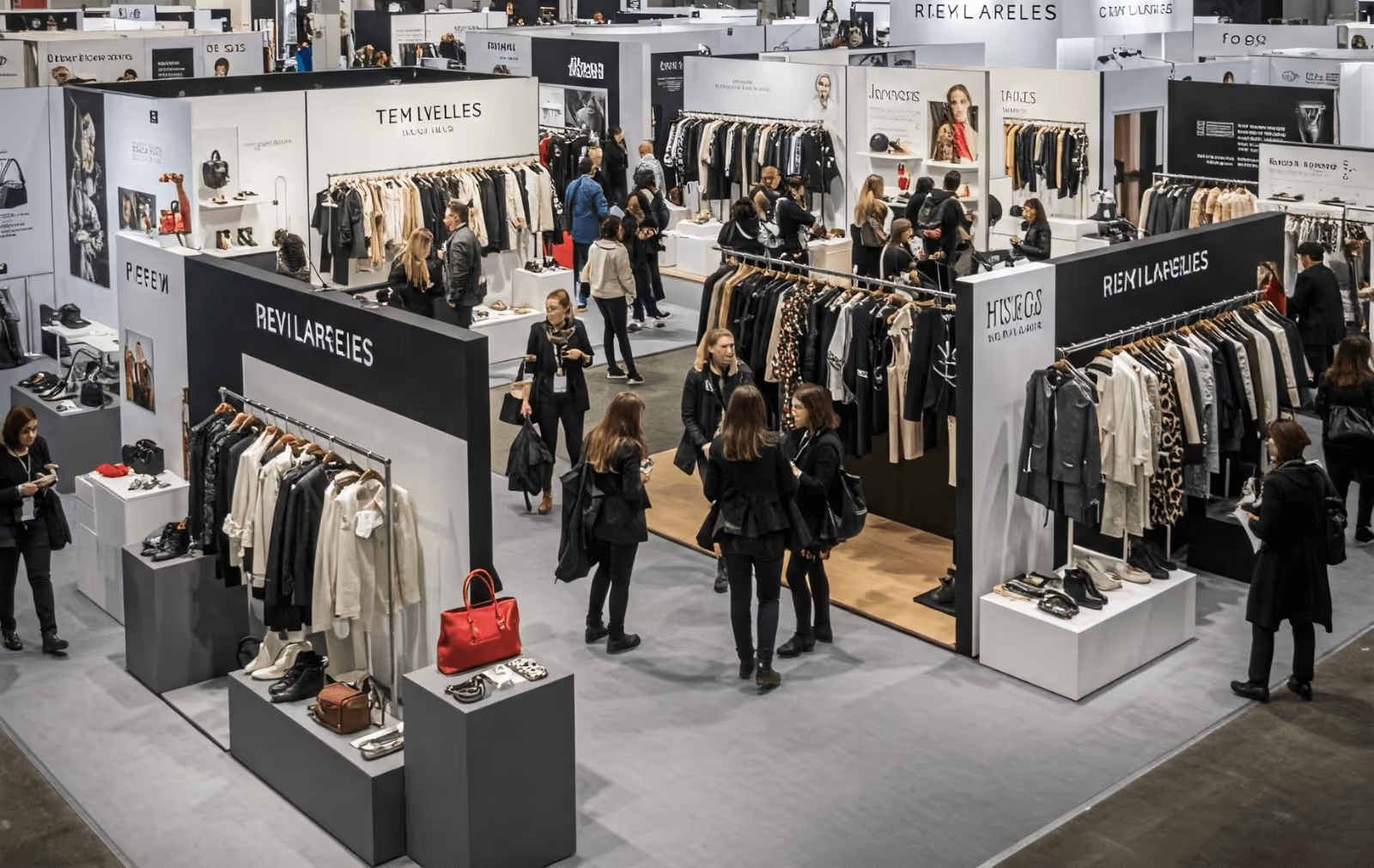
Pricing Control and Margins
One of the biggest differences between B2B and B2C marketplaces is pricing capabilities. Brands listed on a B2C marketplace are available for consumers to shop directly, which means the marketplace may have control over pricing. The brand is subject to the marketplace's sales cycle and may often have products discounted during mandatory promotional events.
Brands using a B2B fashion marketplace have more control, as they can negotiate unique prices for each individual retailer, with buyers on these kinds of platforms often more open to discussing discounts on larger orders or special offers on certain stock.
Personalization
On a B2C fashion marketplace, there are very few marketing opportunities and merchandising is restricted to the constraints of the main website design. Brands are bound by the confines of the B2C marketplace’s standard product listings, which makes it harder to create an impact, stand out against competitors and drive sales.
Alternatively, B2B marketplaces give brands the ability to create their own digital identity via means such as virtual showrooms to showcase their product with an online store.
They also allow brands to create customized linesheets, which can be tailored to specific retailers. This bespoke approach exponentially increases a brand’s chance of securing an order, maximising their potential revenue.
Repeat Orders
B2C platforms have no interest in getting customers to buy from one brand specifically again; they are more concerned with increasing their overall revenue. There is no assistance in building up a loyal customer base for your particular brand or incentivizing repeat orders.
On a B2B platform, however, the software is specifically designed to help brands maximize repeat orders, with functionalities for brands to message buyers directly when they are running low on certain sizes or colors and easy reordering options.
Merchandising and Brand Presentation
B2C platforms use basic templates to showcase product to customers. The format prioritizes efficiency over creativity and is intuitive for end consumers to use, enabling them to make purchases with minimal mental effort.
B2B platforms offer a wide range of product merchandising options, including virtual showrooms, curated line sheets, and buyer-specific catalogs. Fashion buyers have thousands of brands vying for their attention, so a b2b marketplace with a variety of creative product presentation options gives brands the best possible chance of conversion.
Order Size, Minimums, and Assortments
Shoppers on B2C marketplaces often purchase a singular fashion garment. Orders tend to be small, include a variety of items, and are, of course, for personal use.
On B2B marketplaces, buyers often purchase stock in bulk to be more cost-effective. Platforms will often show the size run and price per case pack, so that buyers can order large quantities of the SKUs they need easily to meet in-store demand.
Payment Terms and Sales Cycle
B2C platforms allow customers to pay by card, online wallets, or with a buy now, pay later initiative.
B2B platforms are much more flexible, offering purchase orders, and ACH payments that allow brands and buyers to better manage their cash flow, speed up payment processes, and give buyers confidence that their finances are being managed safely and securely.
Why Is a B2B Marketplace Better For Fashion Brand Growth?
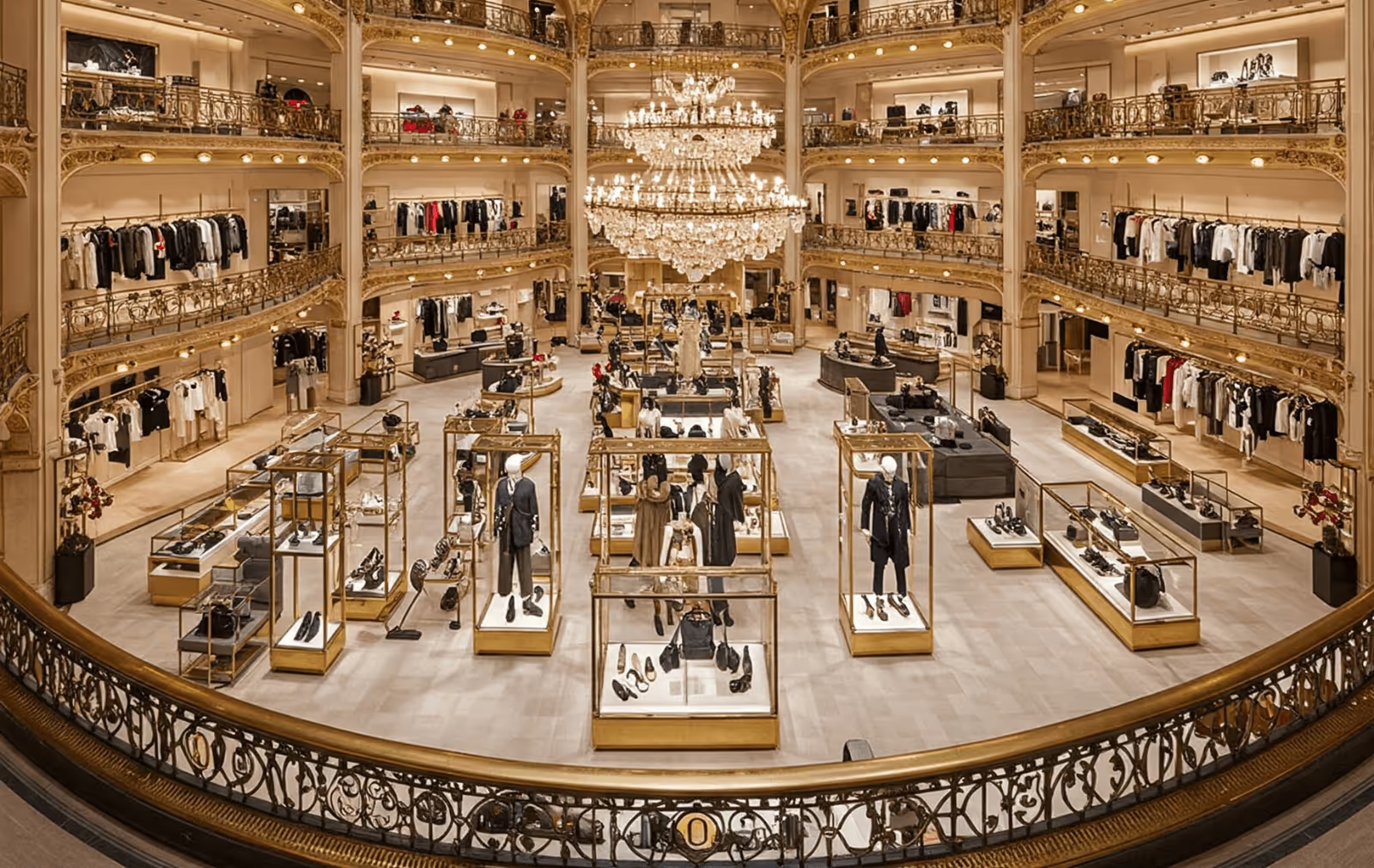
After examining the similarities and differences, it is apparent that several key factors exist which make a B2B marketplace more impactful for driving a brand’s growth.
Scalability Through Wholesale Volume
B2B marketplaces are designed to give brands the best chance at driving high-value orders and creating returning revenue streams. They make it easy for brands to add new product lines as their business grows, and their large, ever-growing networks of fashion professionals mean there are endless potential connections to be made across the globe.
Builds Long-Lasting Relationships
While a B2C fashion marketplace will sometimes collaborate on exclusive items with brands, these relationships are bound to the confines of the marketplace.
B2B fashion marketplaces allow brands to grow long-lasting relationships that can develop further outside of the platform. New business opportunities and collaborations, such as in-store pop-ups, are encouraged so a brand can achieve maximum growth.
More Cost-Effective
Unlike a B2C platform which is restricted to consumer sales, B2B platforms can also facilitate the sale of excess inventory to other businesses, generating additional revenue for brands.
Brands on a B2B fashion marketplace will also typically spend less on marketing and operations costs, as platforms help to reduce the manual workload, freeing up brands to focus time and money on other areas of their business.
Better Inventory Planning and Sell-In Visibility
B2C marketplaces allow brands sold on the platform to view their order history, but due to high product variety, seasonal trends, and the impact of marketplace discounts, it can be hard to truly forecast demand, which can lead to a risk in overproduction.
B2B marketplaces provide fashion brands with a breakdown of their order data per individual retailer, allowing for more effective seasonal planning.
How to Choose Between a B2B or B2C Fashion Marketplace
There are certain factors to consider when choosing between a B2B and a B2C marketplace.
The first is size. If your fashion brand is relatively small and currently your supply chain is unable to process bulk orders, it may be smarter to sell on a B2C marketplace first, while you grow your revenue. Once you are able to improve your infrastructure, you can then move to a wholesale model.
Secondly, consider your growth goals. If you have big plans to scale rapidly, B2B wholesale marketplaces offer the potential for huge international businesses, and should be your first port of call. If you want to grow slowly and steadily at a very gradual pace, start on a B2C platform instead.
Finally, think about your brand’s revenue mix. What percentage of profit would you like to come from wholesale? Will you be offering your own designs directly to customers via DTC or selling solely on a third-party platform?
In Conclusion

While there are benefits to both distribution channels, it's clear that B2B fashion marketplaces offer brands greater opportunities to scale revenue and drive profitable business growth.
In fact, in a recent JOOR survey, when asked to compare the profitability of their wholesale, DTC retail, and DTC e-commerce channels, 52% of brands confirmed that wholesale is their most profitable channel. Not only is it their most profitable, it’s also their largest, with an average of 57% of brands’ business coming from wholesale. This further reinforces the important role of B2B fashion marketplaces and the opportunity they represent for brands.
Interested to see the power of a B2B platform for yourself? Request a demo of JOOR today.
FAQs
Can a fashion brand sell on both B2B and B2C marketplaces?
Yes, fashion brands can sell through a variety of revenue streams, including wholesale, DTC, and B2C marketplaces.
Do B2B fashion marketplaces allow brands to control pricing and discounts?
Yes, nearly all B2B fashion marketplaces allow brands to set their own personalized pricing. Many even allow brands to set bespoke prices per individual retailer, to help them maximize their profit potential.
Why does choosing the right marketplace model matter for fashion brands?
Different platforms, e.g., B2C and B2C, have fundamentally different audiences and require different types of marketing and product presentation. Choosing the right marketplace model is crucial for any fashion brand wanting to ensure growth and business success.
Is a B2B fashion marketplace suitable for small or emerging fashion brands?
B2B fashion marketplaces can be beneficial for brands of all sizes, but remember that gaining access to an international network of connections may lead to requests for bulk, international orders. Small or emerging fashion brands need to have a strong supply chain and suitable cash flow in place to be able to facilitate these orders.


Discover the Top 5 Trends in Wholesale for 2026

Related Insights

How to Measure Trade Show ROI: A Complete Guide to Calculating Event Success
Learn the key metrics that will help you determine whether your in-person wholesale activities are a success and discover how to track long-term progress.
.png)
A Lookback on 2025 at JOOR
Reflect on the insights and innovations JOOR brought to the wholesale industry in 2025, from launching a new first-of-its-kind solution to expanding our global network of fashion brands and retailers.

Why Digital B2B Catalogs are Essential for E-Commerce Businesses
Online catalogs have become a crucial component for retailers and their buyers in an evermore tech reliant industry. Read about how these dynamic product libraries act as comprehensive selling solutions that plug into current buying behaviors.
.avif)
How Does a B2B Marketplace Work?
Welcome to our comprehensive marketplace guide for fashion businesses. Here, you can find everything you need to know about B2B wholesale marketplaces, from understanding their purpose to how to choose one that best suits your business needs.
%2520(2)%2520(1).avif)
8 Ways a B2B Fashion Marketplace Solves Wholesale Scaling Challenges
Learn how a B2B fashion marketplace like JOOR helps your wholesale fashion brand overcome scaling challenges. Maximize resources, build retailer relationships, and enhance distribution to drive growth in the global wholesale fashion market.
.avif)
How Wholesale B2B Marketplaces Help Fashion Brands Find Buyers
Learn the benefits of utilizing a b2b wholesale marketplace that isn't just about transcations, but building lasting relationships and repeat business. Understand more about how b2b fashion marketplaces can help brands looking to scale and build new networks of buyers and connections in other markets.