The Shift From Seasonal Selling to Year-Round Digital Wholesale
Replace rigid seasonal cycles with 365 days of sales by transitioning to digital wholesale, and experience greater growth, better buyer relationships, and improved operations for your fashion brand.
.png)

Wholesale buying habits traditionally followed a seasonal cycle, built around fashion weeks, trade shows, and advance orders with long production times, but changing consumer demand and evolving retailer behaviour have led the way for the digitization of wholesale.
Today, brands are adopting a year-round approach to selling, keeping their inventory visible and allowing orders to be placed 365 days a year. This blog will cover the key differences between seasonal and year-round wholesale and explain what brands need to operate successfully in this model.
What the Traditional Seasonal Wholesale Model Looks Like
Traditional wholesale follows a twice-yearly cycle where brands showcase seasonal collections, buyers place orders months in advance, and product is delivered in bulk later.
While this model creates a predictable sales period, it also leads to slow seasons, higher inventory risk, and limited flexibility to respond to changing demand. It was designed for a slower retail market, but today’s fashion climate requires faster and more flexible buying cycles.
Why Fashion Brands Are Moving Toward Year-Round Wholesale
There are several reasons brands are choosing to transition to year-round wholesale selling, these include:
Shorter Consumer Demand Cycles
Consumers now expect new products year-round, making traditional seasonal buying cycles less effective. Fast fashion, DTC brands, and social media-driven micro-trends have increased demand for constant product refreshes.
Retailer Preference for Smaller, More Frequent Orders
Fashion retailers are increasingly preferring smaller, more frequent orders as this helps them to reduce their held inventory and markdown risk. As a result, brands are making their inventory available-to-sell (ATS) throughout the year to maximize their profit potential.
Digital Platforms Removing Seasonal Limitations
Digital wholesale platforms now allow buyers to browse and reorder anytime, removing the limits of seasonal trade show calendars. Platforms like JOOR offer digital storefronts and linesheets that are available to shop from 24/7, 365 days a year, from anywhere in the world.
Cash Flow & Inventory Risk Reduction
Year-round wholesale helps brands maintain steadier revenue instead of relying on seasonal periods for orders. Smaller replenishment orders also help reduce excess inventory and markdown risk.
Seasonal vs Year-Round Wholesale — A Practical Comparison
Year-round digital wholesale greatly increases a brand’s selling window, offers buyers a better experience, and reduces risk compared with the traditional seasonal selling cycle.
Interestingly, when looking at the two approaches side by side, what also becomes clear is the data potential. 365-day-a-year selling allows brands to capture a complete picture of retailer buying habits, giving them valuable insights that can help to offer more personalized reorder suggestions and improve profit margins.
What a Year-Round Digital Wholesale Model Requires Operationally for Retailers

Retailers that want to embrace year-round digital wholesale need to make sure they have assortment planning tools with strong visual features, not just basic data management.
Capabilities such as color and category filters, carry-forward inventory visibility, and direct order integration will make it much easier for retailers to monitor the gaps in their assortment, improve their product mix, and know which items they need to reorder and when, making their year-round approach much more successful.
Visual assortment planning tools are so incredibly useful for team collaboration, as they allow multiple people to be able to edit an assortment throughout the buying process, crucial with year-round selling when changes may need to be made quickly.
How Wholesale Platforms Enable Year-Round Selling For Brands
Certain wholesale platform features make year-round selling much easier; these include:
Always-On Digital Linesheets & Buyer Portals
Year-round wholesale needs continuously updated digital catalogs rather than static seasonal PDFs, so buyers can make purchases 24/7, 365 days a year. Personalised buyer portals with live pricing and inventory support an ‘always on’ approach and give buyers the confidence to shop from a brand year-round.
Real-Time Available-To-Sell Inventory
Buyers need live inventory visibility to confidently place orders throughout the year. Real-time sync with ERP and inventory systems is essential for wholesale operations and ensures buyers can restock as soon as an item leaves their shelves.
Automated Order Processing & ERP Integration
A continuous wholesale selling model requires automated order processing and ERP integration to handle frequent orders efficiently. A properly connected system will reduce manual work for brands while also speeding up order management.
Data & Analytics to Drive In-Season Decisions
To successfully sell year-round in wholesale requires using real-time data to monitor sell-through rates, emerging trends, reorder activity, and buyer behavior. Closely monitoring this data helps brands create a stronger digital selling strategy and allows them to easily identify restocking and growth opportunities quickly.
The Challenges of Moving to Year-Round Digital Wholesale For Brands
Brands looking to make the switch to 365-day-a-year selling may come across some common roadblocks, such as:
Managing Higher Order Frequency
Year-round selling hopefully leads to year-round sales, but smaller, more frequent orders can increase operational complexity. Brands will need to ensure they are using scalable wholesale order management systems when making the digital switch to ensure they can keep up with increasing demand.
Maintaining Brand Storytelling Digitally
Brands need strong virtual showrooms, digital flagships, and platform brand profiles to replace the in-person storytelling experience. High-quality digital visual content must be used as an immersive storytelling tool to ensure brands are still able to connect with buyers and convey the spirit of their ethos and collections.
ERP & Systems Readiness
Brands may face issues if they try to switch to year-round wholesale selling while using an older ERP system. Many older systems will struggle to process continuous order flow, which can prevent growth, so brands must adopt newer software as soon as possible to reduce the chance of bottlenecks.
Retailer Adoption & Change Management
Some buyers still prefer traditional seasonal buying, and many brands forget to cater to this section of the market when switching to year-round wholesale selling.
Brands looking to maximize their success should adopt a hybrid approach, with digital platforms supporting the in-person experience. Sometimes, meeting in real life may encourage buyers to adopt digital ordering, and brands can help with onboarding, but this should never be forced.
How JOOR Enables the Year-Round Digital Wholesale Model
Designed as a B2B platform specifically for the wholesale fashion industry, JOOR is an ideal tool for supporting seasonal collections, buyer-specific pricing, size matrices, and general global operations. Year-round selling on the platform is made possible by virtual showrooms and shoppable linesheets that allow buyers to browse, order, and reorder online at their own convenience without having to depend on a sales team.
The platform’s real-time inventory visibility and ERP integrations support automated, scalable order processing while its analytics features help brands track key metrics to support year-round wholesale planning.
Conclusion: The Shift Is Already Underway
Year-round digital wholesale is already changing how fashion brands and retailers operate together. Successful brands know that now is the time to invest in digital infrastructures like always-on wholesale platforms and integrated order management systems.
To ensure your brand is not left behind, consider adopting year-round wholesale and book a demo today. Those who embrace the digital 365-day approach to selling will be better positioned to strengthen their retailer relationships, reduce inventory risk, and respond to market demand faster in the future.
FAQs
What is year-round digital wholesale?
Year-round digital wholesale refers to an approach to selling that allows retailers to buy from a brand 365 days a year, instead of during rigid seasonal cycles.
What is the difference between seasonal and year-round wholesale?
In the fashion industry, seasonal wholesale selling traditionally occurs twice a year, around fashion weeks and trade shows. Year-round wholesale selling can happen at any time, catering to retailers' convenience.
Why are fashion brands moving away from seasonal wholesale calendars?
Fashion brands are moving away from a seasonal wholesale calendar and switching to a year-round approach in order to maximize their revenue potential. As retailers increasingly demand available-to-sell inventory in response to rapidly changing trends, brands have realized that using a digital platform like JOOR, which can facilitate always-on selling, is crucial.


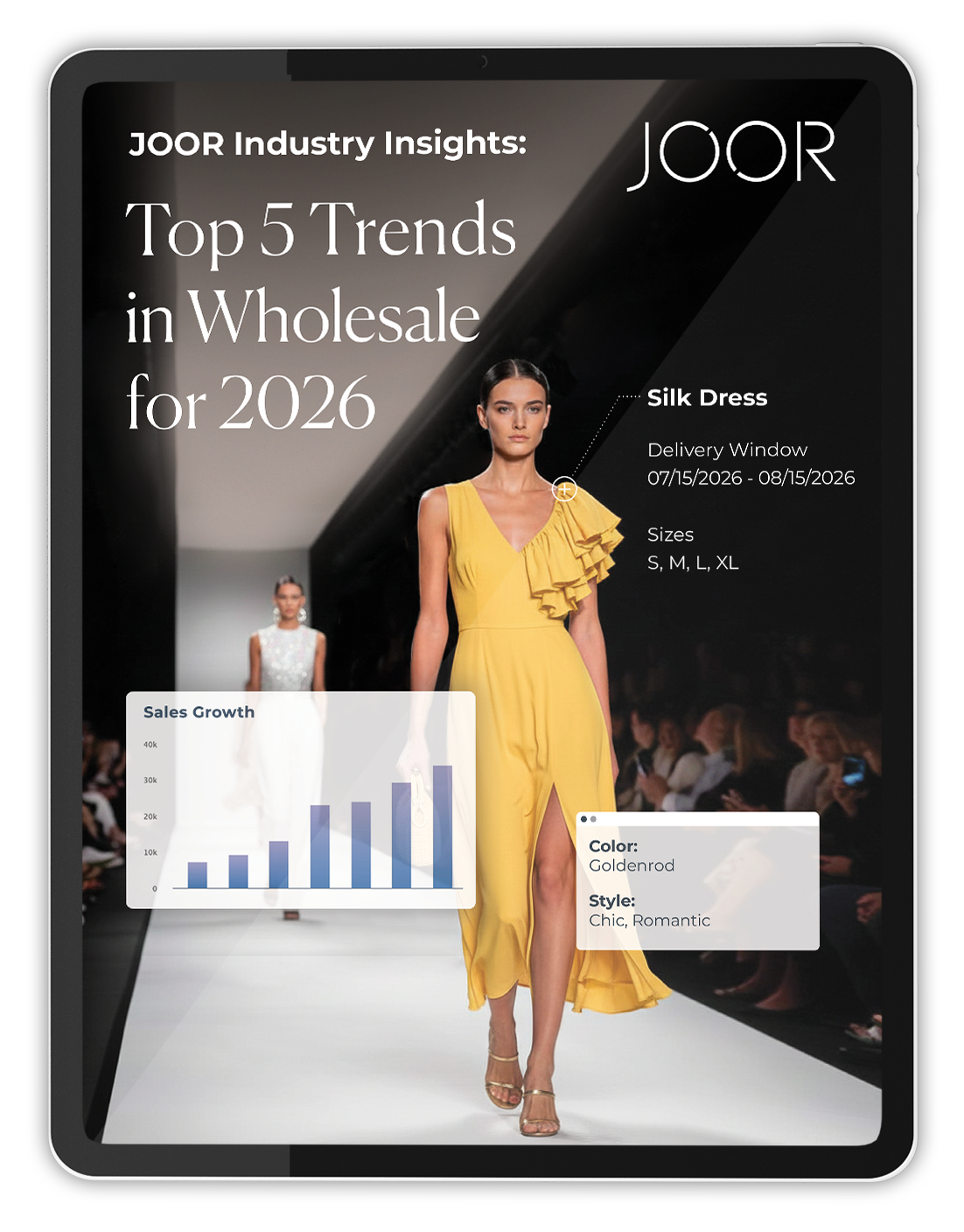
Discover the Top 5 Trends in Wholesale for 2026
Related Insights

How to Measure Trade Show ROI: A Complete Guide to Calculating Event Success
Learn the key metrics that will help you determine whether your in-person wholesale activities are a success and discover how to track long-term progress.
.png)
A Lookback on 2025 at JOOR
Reflect on the insights and innovations JOOR brought to the wholesale industry in 2025, from launching a new first-of-its-kind solution to expanding our global network of fashion brands and retailers.

Why Digital B2B Catalogs are Essential for E-Commerce Businesses
Online catalogs have become a crucial component for retailers and their buyers in an evermore tech reliant industry. Read about how these dynamic product libraries act as comprehensive selling solutions that plug into current buying behaviors.
.jpeg)
Digital Wholesale Explained: How It Works and Why It Matters
Imagine the traditional wholesale process, with all the added benefits of an upgrade to our current vastly virtual environment. That’s digital wholesale, B2B buying and selling through the medium of an advanced virtual platform.

3 Growth Tactics Scaling Fashion Brands are Using in Wholesale
Scale your fashion business at speed with these wholesale brand growth strategies proven to help remove progress blocks, secure market expansion, and positively impact sales.
%2520(2)%2520(1).avif)
8 Ways a B2B Fashion Marketplace Solves Wholesale Scaling Challenges
Learn how a B2B fashion marketplace like JOOR helps your wholesale fashion brand overcome scaling challenges. Maximize resources, build retailer relationships, and enhance distribution to drive growth in the global wholesale fashion market.