What Premium Fashion Brands Should Compare Beyond Price When Choosing a Wholesale Platform
Discover the key criteria fashion brands should consider beyond pricing when shopping for a new wholesale platform. Think matrix ordering, the buyer network, and system syncing capabilities.


Price alone should not be the determining factor when a brand is selecting a fashion wholesale platform. While a cost-effective solution might seem appealing at first glance, long-term fit for your business depends on many other factors besides fees.
This article will break down the main areas of consideration fashion brands should review before deciding on a wholesale platform, including ordering capabilities, system synchronization, buyer network, assortment control, and territory control.
Why a Cheaper Wholesale Platform Can End Up Costing a Fashion Brand More
Looking at the sign-up fee alone for a wholesale platform can be misleading. Many fail to disclose the commission fee they charge per transaction and the chargeback fees from missed delivery windows, both of which can quickly add up season after season and significantly increase a platform’s overall cost.
A cheaper platform may often mean a poorer quality platform. Poor ordering processes can lead to more costly errors or even a loss of sales if buyers give up on the platform altogether and decide to reach out to an alternative brand directly.
Many of these hidden costs are not obvious when conducting a first price comparison of platforms, but they are extremely important to consider.
How Investing in the Right Platform Can Actually Cut Costs
The cost of the wrong platform shows up in operations rather than in the invoice. Belstaff reduced operational costs by 80% after moving its wholesale process onto a single connected platform, most of which came from removing manual order entry and reconciliation rather than from a lower subscription fee.
When comparing platforms, the useful question is not what each one charges. It is how many hours per season your team currently spends rekeying, correcting and chasing orders, and how much of that each platform removes.
Matrix Ordering: Can It Handle Fashion’s Size & Color Complexity?
In wholesale fashion, styles typically come in a variety of sizes and colors, so matrix ordering is crucial to minimize the chance of overselling. The best wholesale platforms will allow buyers to view and order the whole size/color grid on one screen, rather than picking each variant individually.
Platforms with visual assortment tools make it easy to group styles on a visual board so buyers can clearly see their entire assortment and quickly identify any gaps or overlaps.
General B2B and D2C ecommerce platforms often struggle with this, making ordering slower and more error-prone. Unless your fashion business is incredibly small (and plans on staying that way), it will struggle to use a wholesale platform that can’t handle matrix ordering.
Those with large collections and multiple colorways need to consider this when choosing a wholesale platform.
Pre-Book vs. At Once Orders: Does It Handle Both?
A pre-booked order is placed months ahead against future production, while an at-once order is placed against stock that has already been produced and is available to sell. An effective wholesale platform will allow both types of orders in the same cart, automatically assigning the right ship date to each.
Unfortunately, many platforms cannot handle both effectively, often leading to overselling current stock or under-committing future production. Errors like this can irrevocably damage the brand-buyer relationship, so those looking to adopt a wholesale platform need to carefully consider their ordering needs when choosing which ecosystem to use.
PLM & ERP: Does Product Sync Data Actually Flow?
Product Lifecycle Management refers to the process of managing a product from design all the way to delivery. A PLM system can connect to a wholesale platform so that product pricing, color, and size information automatically flows in.
Once an order is placed on the platform, order confirmation should flow out to the allocation and fulfillment team. When comparing wholesale platforms, don’t ask about integration with your ERP; instead ask, how much of my data will move between systems on its own?
Familiarity: Are Buyers Actually Using It?
A cheap B2B platform that no buyers know how to use is worthless to a fashion brand. Similarly, a cost-effective platform that no buyers have even heard of before is also not worth investing in.
For the best chance of wholesale success, brands should look for a platform that has good visibility and reputation within the industry. Alongside having a strong network, the platform should already be used by your retail partners, so you don’t need to teach them the functionality, and they can go in and place orders independently.
Marketplace Vs Private Portal: Which Buyers Network Fits Your Brand?

A wholesale marketplace with an open network allows buyers to freely search for and discover brands, while a private portal is closed, and brands must grant buyers access to see their collections.
Open Marketplace Model
An open wholesale network offers brands greater visibility and growth potential, as the marketplace makes it easy for retailers to reach out. However, this visibility can also be a hindrance if the platform doesn’t have parameters in place, particularly for luxury brands, as everyone within the network can view a brand and its collections.
Many open marketplaces are built for short-term transactions: buyers access a brand, order what they need, and leave, so it’s important to use a platform that has a focus on relationship building rather than single transactions
Private Portal Model
A private wholesale platform gives brands full control over which buyers can see and connect with them; however, since there is no shared discovery network, brands must bring their own buyers to the platform.
This model can be useful for established brands that want to nurture their relationships with an existing curated account list. It is almost impossible for an emerging brand to find success in this way as it relies solely on existing partnerships.
How JOOR Balances Open Marketplaces vs Private Portals
JOOR’s buyer prospecting tool offers an open network alongside strict privacy settings. Limited-view brand profiles are discoverable by buyers, but they must then request approval to gain access to digital showrooms and pricing information. This allows brands to grow their retail network while remaining in control of who can see wholesale information and pricing for each individual collection.
See a Digital Showroom In Action
Assortment & Territory Control: Can You Decide Who Sees What?
When choosing a wholesale platform, it’s important to consider their localized assortment management approach to ensure your brand can grow globally with ease.
Account-Tiered Assortments
Brands need to be able to show different product mixes to different accounts due to seasonal cycles, local trends, or cultural preferences. An effective wholesale platform will allow brands to segment their account list and show them personalized linesheets with region-specific MOQs and shipping fees.
Territory Exclusivity
Territory exclusivity is when a brand gives a retailer exclusive rights to sell certain products within a set region. This helps premium brands to protect their value and prevents retailer overlap.
The best wholesale platform will automatically enforce territory exclusivity for brands, so they do not have to spend time manually tracking it themselves.
Brand & Pricing Protection: Can You See Diversion Before It Hurts You
A Minimum Advertised Price (MAP) is a price agreed upon by both brand and retailer, as the lowest price a retailer is allowed to advertise a product for.
When a product is sold through unauthorized retailers or in markets it was never meant for, this is known as diversion. Diversion is most damaging to premium and luxury brands, where pricing and exclusivity protect brand image.
A good wholesale platform will give brands visibility into where their product is moving, but ultimately even the best platform cannot guarantee retailers will follow the rules.
To Conclude
Choosing a wholesale platform based on price alone leaves fashion brands open to missing many of the key factors that really matter for their business. Fashion brands should take their time to examine a platform’s matrix ordering capabilities, data syncing services, and buyer network to ensure they find a platform that’s the best fit for their needs.
While price differences might seem like a one-time thing, investing in the wrong platform can cause issues to compound over many years, costing your brand thousands of dollars in the long run.
Wondering if JOOR is worth the investment? Use our ROI calculator to see what kind of wholesale growth you could experience on our platform.
FAQs
How much does a B2B wholesale platform cost for a fashion brand?
Pricing for B2B wholesale platforms varies across the fashion industry, with providers charging through user-based fees, flat monthly subscriptions, or percentage-based commissions on transactions.
JOOR never charges a commission on your wholesale orders. Instead, JOOR pricing is tailored based on the number of user seats and capabilities required. Find out more on our pricing page.
What size of brand gets the most value from a B2B wholesale platform?
Brands that already run an established wholesale channel see a return fastest. In practice that means already managing multiple stockists across more than one territory, running pre-book and at-once orders in the same season, and syncing product or order data with an ERP. At that level of complexity, manual linesheets and email ordering start to cost revenue through order errors, slow order capture and stale availability.
Do we have to change our ERP to change wholesale platform?
No. JOOR connects to more than 100 ERP, PLM and POS systems, including NetSuite, SAP, Shopify, Zedonk, Brightpearl and Apparel Magic. Brands can change how they sell wholesale without changing the system finance and operations run on.
What’s the difference between a wholesale platform and a transactional marketplace?
Transactional marketplaces facilitate wholesale orders, but they do not help brands grow long-term business relationships with retailers. A B2B wholesale platform will help brands to find new retail partners and nurture existing relationships so they can drive growth and scale.
Does a wholesale platform work alongside a brand’s existing Shopify or DTC storefront?
Yes. The best wholesale platforms, like JOOR, will sync with your brand’s existing Shopify or DTC storefront for real-time inventory updates, so retailers can always access the latest stock information and place accurate orders.


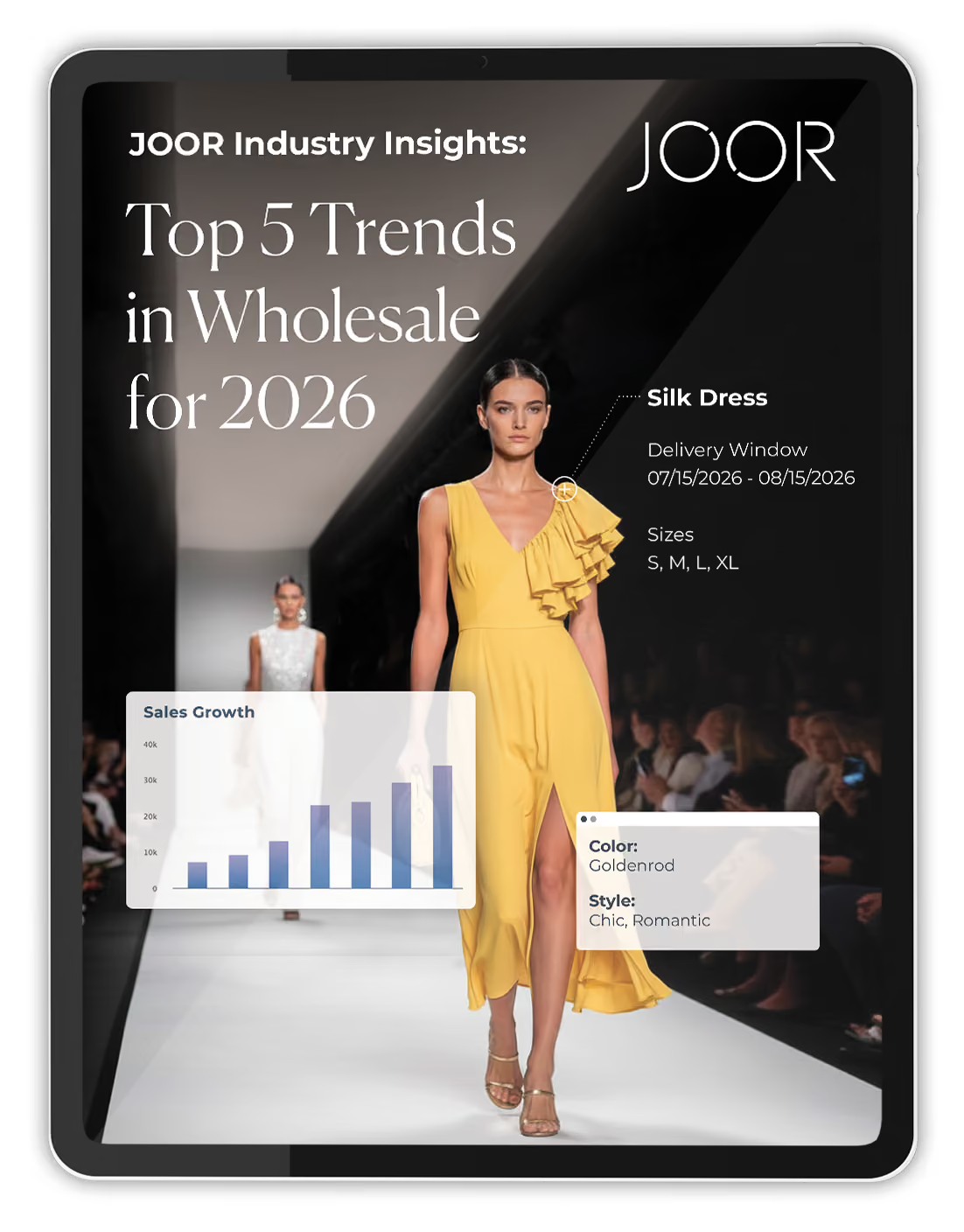
Discover the Top 5 Trends in Wholesale for 2026
Related Insights

How to Measure Trade Show ROI: A Complete Guide to Calculating Event Success
Learn the key metrics that will help you determine whether your in-person wholesale activities are a success and discover how to track long-term progress.
.png)
A Lookback on 2025 at JOOR
Reflect on the insights and innovations JOOR brought to the wholesale industry in 2025, from launching a new first-of-its-kind solution to expanding our global network of fashion brands and retailers.

Why Digital B2B Catalogs are Essential for E-Commerce Businesses
Online catalogs have become a crucial component for retailers and their buyers in an evermore tech reliant industry. Read about how these dynamic product libraries act as comprehensive selling solutions that plug into current buying behaviors.

Protecting Luxury Exclusivity During Wholesale Distribution Growth
Learn how high-end fashion brands can scale their business without damaging their prestige using partner vetting, pricing controls, and digital merchandising standards.