

The US is one of the largest wholesale markets for international fashion brands, and with retailers always searching for new products, the region holds endless untapped potential.
Many fashion brands believe they can’t enter the market without a local warehouse for their stock, but that's not true; they simply need smarter shipping terms. But which is most effective? And which is best for your specific business? DDP vs FOB?
This article will explore the main shipping terms and what they mean for brands, how duties work, and how to set up a wholesale fashion business to serve US buyers.
Do You Need a US Warehouse to Sell Wholesale in the US?
Fashion brands don’t need a US warehouse to sell wholesale in the US; they just need a B2B platform like JOOR that allows them to negotiate shipping terms with international retailers.
This question usually stems from a DTC mindset, where fast delivery depends on local stock availability, but wholesale works differently. Buyers and brands work with much longer lead times, so they can plan delivery logistics in detail once a wholesale order is placed, meaning shipping is not a concern.
Why Pre-Order Wholesale Suits Shipping from Overseas
The pre-order model ensures buyers commit to orders months ahead of the delivery window. This lead time absorbs international transit, so shipping from Australia, Europe, or a factory elsewhere isn’t a concern. This means you can enter the US market without the cost and risk of holding stock there.
How Selling Through a Wholesale Platform Works When You Ship From Overseas
A B2B wholesale platform connects fashion brands and buyers from around the world, eliminating the need for a physical presence in the form of warehouses and showrooms.
Time Zones Stop Being a Barrier
An Australian brand and a New York buyer share almost no working hours, but a wholesale platform allows them to work together seamlessly.
The buyer can virtually browse collections and place orders at their local time without having to take into consideration the brand's schedule. When it's business hours in the brand’s time zone, they can instantly send responses to buyer queries and process the order.
No US Showroom Needed
A B2B platform eliminates the need for a US-based warehouse. Instead, brands can create virtual showrooms for retailers to browse and attend digital trade shows for a fraction of the price.
Buyers Already Know the Workflow
Ordering from a new overseas brand feels like a much lower risk when it happens on a platform that a buyer is already familiar with and knows how to use.
Fewer Cross-Border Errors
B2B platforms act as a central source of information for pricing, terms, windows, and order data, instead of being spread across emails, PDFs, and spreadsheets. This greatly reduces the chance of errors related to customs, duties, and shipping.
DDP vs FOB vs EXW: The Shipping Terms That Decide Who Pays
Retailers don’t automatically pay for wholesale shipping and duties. A fashion brand can choose its terms to determine who absorbs the costs; however, their chosen shipping arrangements must be one of the International Chamber of Commerce’s official Incoterms®.
The three most popular are:
- Delivered Duty Paid (DDP)
- Free On Board (FOB)
- Ex Works (EXW)
EXW, DDP & FOB: At a Glance
- EXW: Goods are available at a brand’s premises, and the buyer handles everything from there. It’s simplest for the brand but puts the most work on the buyer.
- FOB / FCA: brands get goods to the carrier or port, and the buyer pays freight and duties from that point. FOB is often used loosely in fashion, and FCA is the formal rule for air and courier.
- DDP: brands agree to deliver to the retailer’s door, with freight and duties included in their price. DAP is an alternative middle ground where goods are delivered to the door with the buyer paying duties.
Choosing Terms for your US Accounts
When choosing your shipping terms, there’s no one-size-fits-all answer.
Smaller US boutiques often prefer DDP pricing because it avoids surprise costs, while larger retailers often have their own freight forwarders and prefer FOB or EXW.
For the best chance of wholesale success, brands should offer different terms by account type, or run two USD price lists (one landed, one excluding freight and duty).
It’s important to note that while DDP is appealing to retailers, brands must absorb any duty changes between order and shipment. Something to be particularly wary of during volatile socio-political times.
How Do US Import Duties Work for Overseas Fashion Brands?
Below is a brief guide to duties and charges when selling in the US, but this is not customs advice. Always check with your local authority before making any shipping arrangements.
What Determines the Duties a Brand Pays?
The amount of duties to be paid depends on the product’s classification (HTS code), its value, and its country of origin.
Remember, country of origin means where the goods were made, not where the brand is based. A brand headquartered in Australia that manufactures elsewhere is taxed on the manufacturing country.
Why a Customs Broker or Freight Forwarder is Worth an Early Conversation
Brands looking to enter the US market without a warehouse could benefit from working with a customs broker who can help them with entry filings and customs bonds, and a freight forwarder who can actually help move the goods from place to place.
Research brokers as soon as possible when considering entering the US, as getting a duty estimate for your core categories can help you to build out a profitable USD price list. Remember, US tariff policy has changed repeatedly since 2025, so be sure to confirm current rates before setting prices.
Setting Up Your Wholesale Business for US Buyers

For the best chance of securing US wholesale business, follow this guidance:
Price in US Dollars
Buyers think in their own currency, so showing USD pricing makes your line easier to compare and approve. State clearly whether USD prices are landed or exclude freight and duty so buyers can get a complete picture of how much working with you might cost.
Build Delivery Windows Around Transit & Customs Time
To work out the best delivery window for your brand, identify your production completion date, add transit time, and then consider also adding in a buffer for your product to pass through customs.
It’s much better to give a date further out in the future that you can hit consistently, rather than choose a close one that risks cancellations. Hitting deadlines on time builds brand loyalty and can lead to more repeat orders.
Make Shipping Terms Visible Before the Order is Placed
Terms buried in an email cause disputes, while terms on the linesheet set expectations upfront. Always include: the Incoterm, named location, who pays duties, and minimums if relevant.
How JOOR Helps International Brands Sell to US Retailers
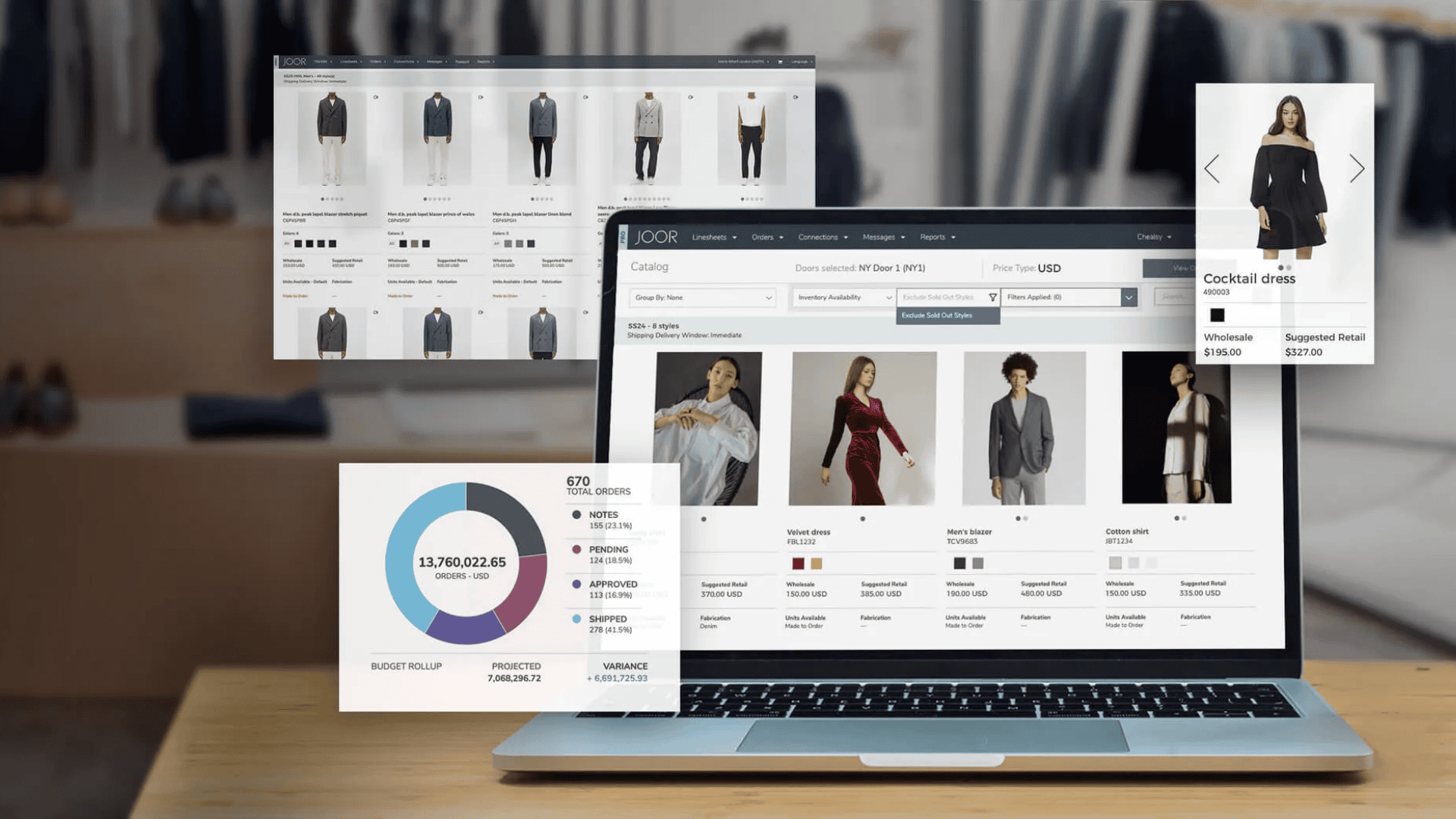
JOOR makes it easy for fashion brands to break into the US wholesale market without having a physical presence in the country thanks to its extensive global network of retail connections, shoppable line sheets, digital showrooms, payment tools, and prospecting features.
JOOR acts as your showroom and order desk in one and lets you find new stockists throughout the US, while keeping you shipping exactly as you do today.
A Digital Showroom Buyers Can Access All Year Round
There are over 700,000 buyers on JOOR, and a large portion of them are based in the US and looking for new products.
Interested retailers will browse brands’ virtual showrooms and place orders on collection, all without you having to travel to the US for a trade show or invest in a local showroom.
USD Price Lists & Clear Terms On Every Linesheet
On JOOR, linesheets are set up to be localized, so US buyers see prices in their own currency alongside relevant shipping terms.
This means they can shop with no surprises, and as a result, there are fewer back-and-forth emails between brands and buyers. This means faster approvals and fewer disputes at delivery.
Delivery Windows Built Into Every Order
JOOR shows buyers a delivery window for all their orders, but allows brands to set shipping windows that account for transit and customs, so both sides can plan against the same dates. This sets realistic expectations from the start and reduces the risk of cancellations.
Reach US Buyers with JOOR Discover
JOOR’s powerful prospecting tool, JOOR Discover, allows brands to target US retailers by category, region, and wholesale price range. It also allows brands to see who’s engaging with their profile.
Case Study
“JOOR has made outreach so much easier. With traditional means such as Google campaigns, you’re not able to find the retailers that you can through JOOR. Through JOOR, our company is able to see who is interested in us on the Discovery Dashboard. This allows us to scale our approach when interacting with other buyers.”
Rebecca Thomas, Managing Director of My Beachy Side.
Read more about this case study here.
Getting Paid by Overseas Retailers with JOOR Pay
Cross-border payment can be a real worry for international brands. Chasing invoices across currencies can be stressful and time-consuming, and there is often a credit risk associated with taking on a new account.
JOOR Pay acts as merchant of record and offers multiple payment methods in nearly all currencies, offloading risk and improving cash flow.
Case Study: How Auckland Brand Wynn Hamlyn Grew Its International Wholesale Business With JOOR
Wynn Hamlyn, an Auckland-based label, doubled sales in its first six months on JOOR Pro while reducing time spent converting currencies and updating linesheets.
The brand joined one of JOOR’s digital trade shows, a Passport event in collaboration with Australian Fashion Week, which connected them with retailers from around the world who were interested in stocking product from Australian brands.
After connecting with their newly found stockists on the JOOR platform, they used virtual showrooms and shoppable line sheets to sell collections without having an international physical presence.
The label is now stocked across North America, Europe and Asia and is a true testament to the power JOOR has to connect brands and retailers from around the world.
Read more about this case study here.
Conclusion
Brands selling wholesale to US retailers don’t need a US warehouse; they need clear shipping terms with buyer appeal and good margins, USD pricing, and realistic delivery windows.
Discover how JOOR helps international brands reach US retailers. Request a demo.
FAQs
How do US buyers find international brands on a wholesale platform?
US buyers can find international brands on the wholesale platform JOOR by filtering by category, price point, and style, so discovery doesn’t depend on where the brand is based. Brands can also reach out to US retailers directly and see who’s engaging with their collections.
Do US retailers expect overseas brands to hold stock in the US?
In general, US retailers do not expect overseas brands to hold stock in the US. Wholesale usually operates on a pre-order model, where US buyers routinely order from international brands that ship from overseas.
What buyers care about is reliable delivery windows and clear terms, not where the warehouse is. The exception is at-once or replenishment orders, where speed matters more.
Can I sell to US retailers on JOOR if my brand ships from outside the US?
Yes, brands that ship from outside the US can sell to US retailers on JOOR. Brands list collections and create virtual showrooms on JOOR, and US buyers discover them and place orders through the platform, with brands shipping from their existing location. Many Australian and other international brands already sell to US retailers on JOOR in this way.
Can I sell to US retailers and other regions from the same platform?
Yes, JOOR allows brands to separate price lists by currency and region, so they can create personalized linesheets for retailers in different countries with unique shipping terms.


Discover the Top 5 Trends in Wholesale for 2026
Related Insights

How to Measure Trade Show ROI: A Complete Guide to Calculating Event Success
Learn the key metrics that will help you determine whether your in-person wholesale activities are a success and discover how to track long-term progress.
A Lookback on 2025 at JOOR
Reflect on the insights and innovations JOOR brought to the wholesale industry in 2025, from launching a new first-of-its-kind solution to expanding our global network of fashion brands and retailers.

Why Digital B2B Catalogs are Essential for E-Commerce Businesses
Online catalogs have become a crucial component for retailers and their buyers in an evermore tech reliant industry. Read about how these dynamic product libraries act as comprehensive selling solutions that plug into current buying behaviors.

Always-On Selling: How Top Brands Build Buyer Engagement Year-Round
Discover the strategies successful fashion brands use to secure wholesale sales all year, and implement these tactics today to help your business drive consistent growth.

How Fashion Brands Sync Inventory, Orders, and Finance Using ERP Systems
Learn how an ERP system could help your fashion brand streamline its wholesale workflow and bring all areas of the business together with a centralized system.

How Fashion Brands Are Protecting Wholesale Margins in a High-Cost Operating Environment
Learn about the strategies and techniques that can help to protect your wholesale profit margins, from tiered pricing to discount controls, landed cost accuracy, and digital wholesale operations.