Menswear Market Analysis: Insights to Prepare You For Next Season
Explore our exclusive JOOR data insights on the menswear category and learn more about the latest market trends that can help guide your wholesale strategy for the coming season.


Summary of the Menswear Industry
The global menswear market has been on an upward trajectory as prices shift and consumer demand evolves.
Exclusive transaction data from like-for-like brands on JOOR across the past three years (Nov 2023 - Oct 2026) reveals:
- Retail price points are rising: units sold under $250 decreased 11%, while those $250-$1,000 increased 2%.
- Outerwear is proving popular: 2026 units are up 16% from last year for this key product category.
- Regional trends: In 2026, EMEA retailers bought the most units of menswear at 61% of total global purchases; North America had the highest penetration of footwear at 9% of the region’s menswear assortment; and APAC had the highest penetration of bags & accessories at 7%.
As fashion’s leading wholesale B2B platform, with access to over 14,000 discerning brands and 725,000 curated fashion buyers across 150 countries, our proprietary data allows us to uncover new industry trends and market dynamics before anyone else. Read on to discover how the menswear market is changing and how you can use these insights to inform your 2027 wholesale strategy.
Rising Menswear Prices Drive Growth
Over the past three years, the menswear category on JOOR (which includes apparel, footwear, and accessories) has been on an upward trajectory, with total menswear GMV in 2026 up 11% over 2024. When looking specifically at like-for-like brands, the total volume of sales is relatively flat; however, the composition of orders over the past three years has shifted, with the number of units decreasing and the average price point going up.
This elevation in price point is being driven by a shift towards the $250-$1,000 retail price bracket. Over the past three years, the number of units sold with a retail price under $250 decreased 11%, while the number of units sold in the $250-$1,000 retail price bracket increased 2%.

Accordingly, the under-$250 price bracket has reduced in share from 67% to 64% of all units sold, whereas the $250-$1,000 price bracket has increased in share from 30% to 33%. As importing and production become increasingly expensive, many brands are developing hero products that consumers are willing to pay more for, to cover rising costs and protect revenue.
The Key Takeaway for Retailers
Retailers can introduce higher-priced items to their assortment without damaging sales by marketing more expensive products to consumers as investment pieces. Sales assistants should make an effort to highlight the construction and quality of pieces to in-store shoppers to reinforce their value.
The Key Takeaway for Brands
As the menswear category evolves, JOOR has launched “Just His Style: The World's Top Menswear Retailers”—a digital event highlighting the best stockists of men's clothing, footwear, and accessories around the world. Brands can reach out to retailers interested in luxury menswear and make new business connections in just a few clicks.
Outerwear Increases in Popularity

The largest category within menswear is apparel, accounting for 84% of total units sold in 2026, followed by footwear at 7%, bags and accessories at 5%, and outerwear at 3%; however, all categories have decreased in terms of units sold vs. the prior year, except outerwear.

Outerwear has been growing, with 2026 units up 16% as compared to 2025. Intriguingly, outerwear is also the category with the highest average price point by far. Apparel and bags and accessories are dominated by the under-$250 retail price segment, making up 69% and 88% of their share of units, respectively. In contrast, the under-$250 price segment makes up only 11% of outerwear sales and, instead, nearly two-thirds (62%) of outerwear units sold have over a $500 suggested retail price.
Consumers are used to paying more for categories like outerwear due to its perceived longevity, durability, and cost-per-wear, so as designers continue to innovate in the category, retailers are capitalizing on this by increasing their investment in outerwear as an exciting opportunity for revenue growth.
The Key Takeaway for Retailers
JOOR’s network includes several menswear brands with strong outerwear offerings. Use the Find New Brands feature and filter by category to identify emerging and established labels with innovative outerwear designs this season.
The Key Takeaway for Brands
Consider evolving or expanding your outerwear product range to cater to growing demand. As the category carries a higher price point, investing in quality materials and more detailed construction could pay off as buyers search for well-made styles.
Regional Menswear Wholesale Habits Explained
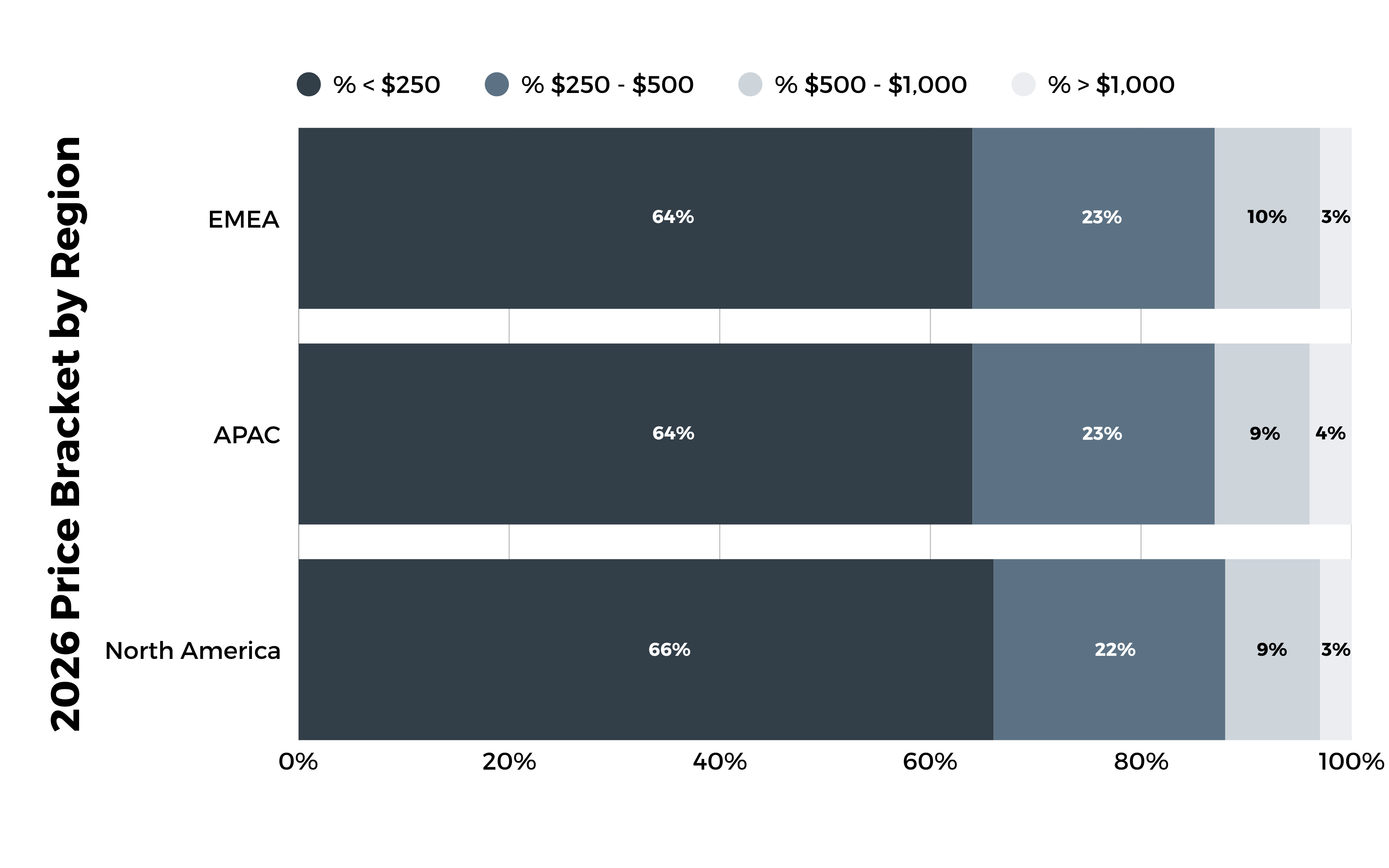
Retailers around the world are building the price architecture of their menswear assortments in a similar manner—with nearly two-thirds of units falling under $250 and just a pinnacle of 3-4% of units falling over a $1,000 retail price point. However, there are some key differences in how retailers build the category mix of their assortments based on consumer demand in their region.

North America is dominated by apparel (86%) and has the highest footwear penetration at 9% of total units vs. 2-8% in the other regions, while APAC has the highest penetration of bags & accessories at 7% of total units vs. 4-5% in the other regions. This stands to reason given the lack of gender norms around carrying a bag in Asia, with many regional menswear styles driven by gender-fluid digital trends and unisex streetwear.
EMEA-based retailers have the lowest apparel penetration at 82% but place a significant investment in footwear, accessories, and outerwear, which may in part be driven by consumers' desire to invest in locally made European leather goods and shoes.

EMEA is by far the dominant region in the global menswear market, accounting for 61% of total global units purchased—significantly more than APAC and North America combined.
That said, overall units sold to EMEA retailers are down 9% vs. last year, whereas APAC is showing a smaller decline in units and North America is relatively flat compared to last year. While Europe remains the epicenter of luxury menswear, it seems the retailer trend to buy fewer units in favor of higher-priced items is consistent across all regions.
Key Takeaway for Retailers
Use JOOR’s Visual Assortment tool to ensure your menswear product mix contains a variety of relevant categories for your region, spanning apparel, footwear, accessories, and outerwear.
Key Takeaway for Brands
Leverage these market insights to guide which region you should expand to next. Use the Find New Retailers feature on JOOR and filter by location to start making business connections with stockists in new markets today.
How JOOR Can Help You Succeed in the Menswear Category
Menswear has untapped potential, and brands and retailers looking to increase their chances of wholesale success should act now to capitalize on the category’s momentum.
Over 23,000 unique retailers placed orders for menswear on JOOR in 2026, and the platform is home to many of the category’s top designers, including A Bathing Ape, Aspesi, Axel Arigato, Belstaff, Berluti, Boggi, Dunhill, Emporio Armani, Golden Goose, and Thom Browne.
Brands looking to find new menswear stockists can browse “Just His Style: The World's Top Menswear Retailers” on JOOR Passport to make new buying connections, while retailers looking to diversify their menswear assortment can open a free JOOR account and place orders with some of the most sought-after global menswear brands today.
*Date ranges throughout the study represent 12 months from November 1 to October 31. For example, 2026 is based on 11/1/25-10/31/26.


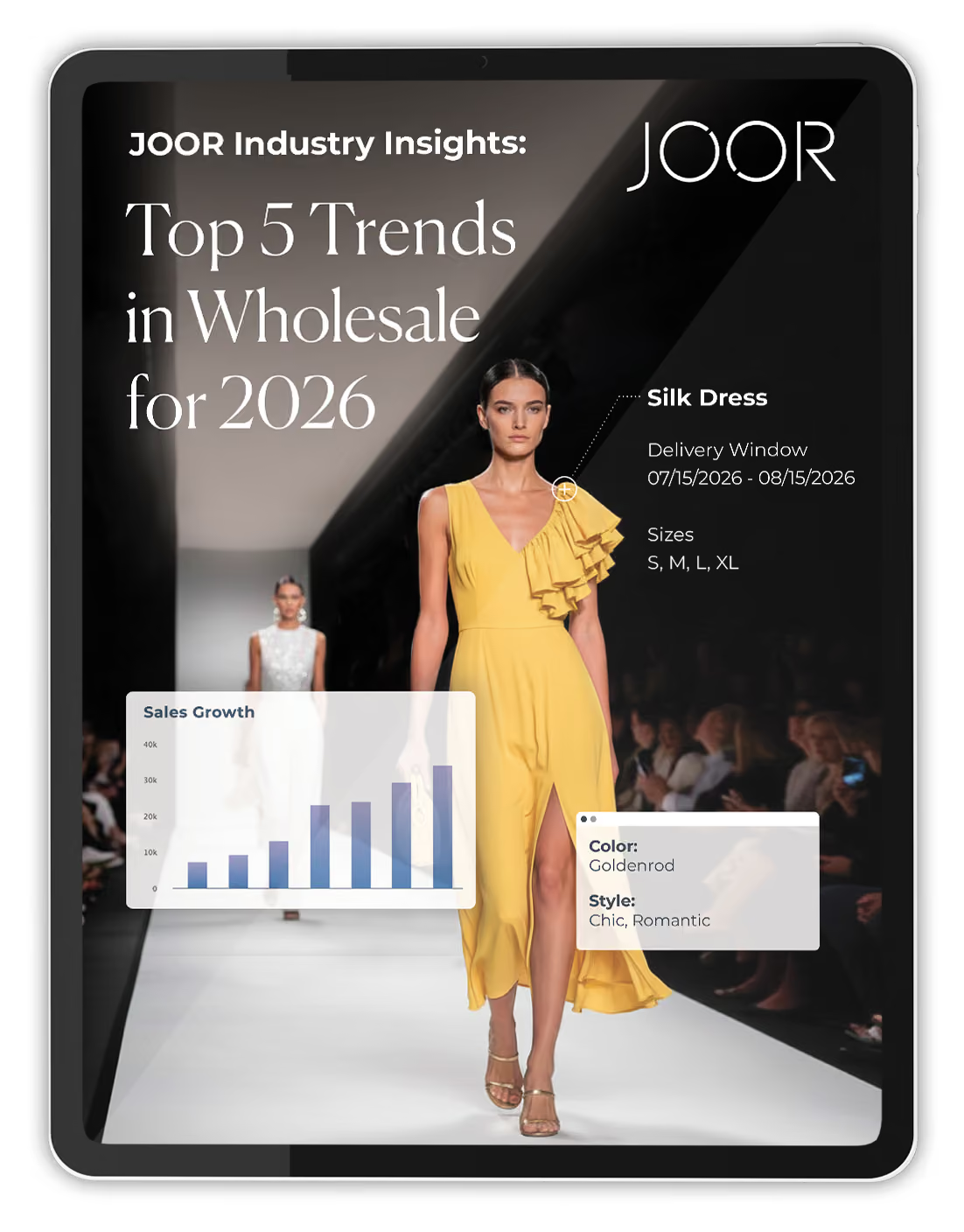
Discover the Top 5 Trends in Wholesale for 2026
Related Insights

How to Measure Trade Show ROI: A Complete Guide to Calculating Event Success
Learn the key metrics that will help you determine whether your in-person wholesale activities are a success and discover how to track long-term progress.

Why Digital B2B Catalogs are Essential for E-Commerce Businesses
Online catalogs have become a crucial component for retailers and their buyers in an evermore tech reliant industry. Read about how these dynamic product libraries act as comprehensive selling solutions that plug into current buying behaviors.

8 Ways a B2B Fashion Marketplace Solves Wholesale Scaling Challenges
Learn how a B2B fashion marketplace like JOOR helps your wholesale fashion brand overcome scaling challenges. Maximize resources, build retailer relationships, and enhance distribution to drive growth in the global wholesale fashion market.

French Market Analysis: Insights to Prepare You for Next Season
Discover new opportunities in the French wholesale fashion market thanks to JOOR’s exclusive transaction data, and use our findings to inform your growth strategy for the coming season.
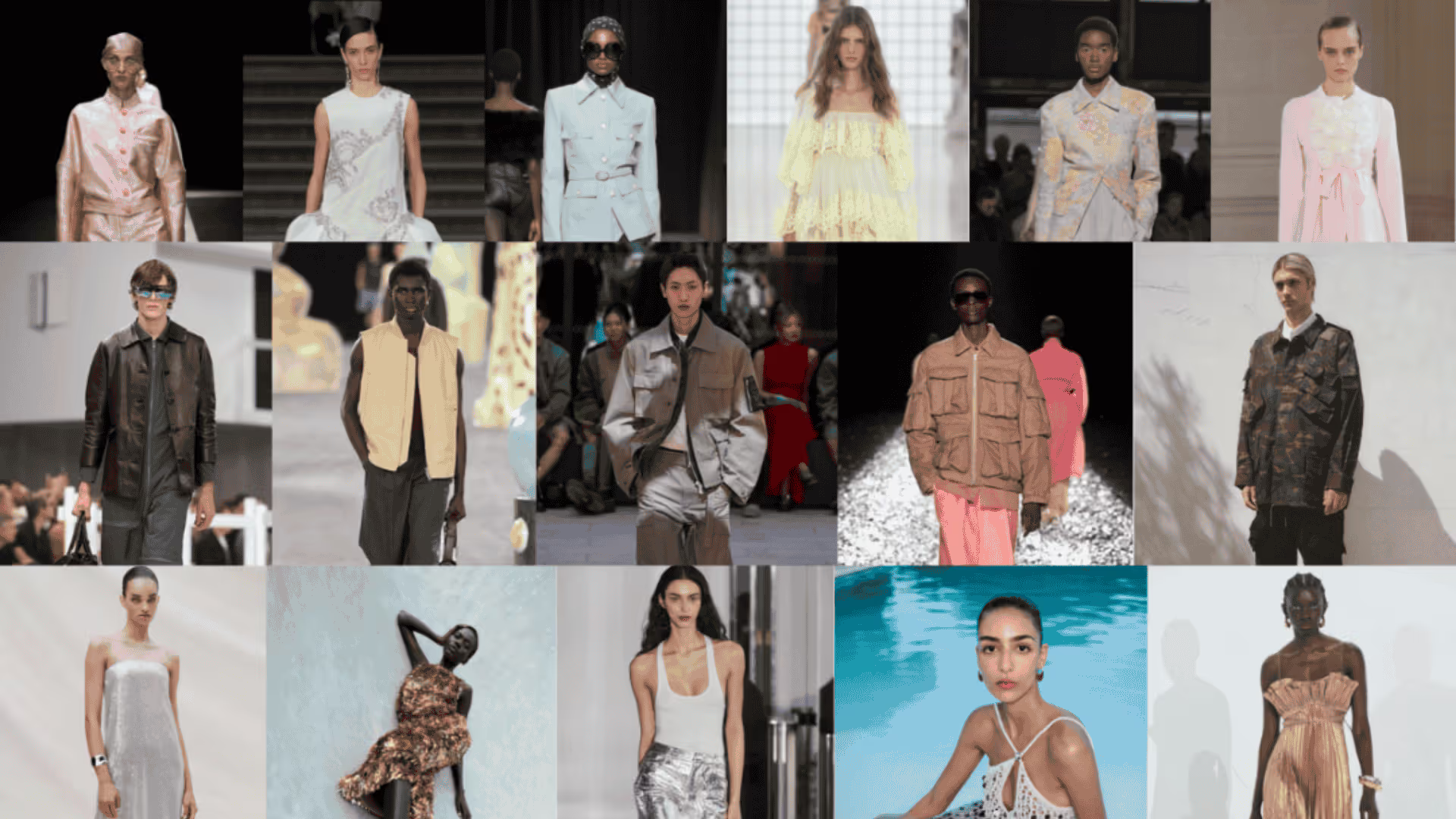
2027 Fashion Trend Report
Uncover the must-know fashion trends due to be released throughout 2026 with JOOR's exclusive Fashion Trend Report. Dive into each seasons styles and shop the collections on JOOR Passport - where runway inspiration meets wholesale buying.
Middle East Market Analysis: Exclusive Wholesale Insights
See how the Middle Eastern market is becoming increasingly important for the global fashion industry with JOOR’s exclusive transaction data insights, and learn how your business can tap into the region’s potential.