

In an increasingly digital world, modern fashion buyers' expectations are changing. Now more than ever before, buyers are looking for the ability to shop wholesale fashion both in person and online, in the way that best suits their work schedule.
Regardless of whether fashion brands take a multichannel or omnichannel approach, they must adopt hybrid selling to create connected customer journeys and secure sales from modern buyers.
What Is Hybrid Selling in Fashion?
Hybrid selling in fashion refers to the strategic approach that blends in-person selling at trade shows or during showroom appointments with online tools such as virtual showrooms and digital linesheets. By combining digital and physical, brands can provide retailers with a more flexible approach to buying.
The in-person and online elements of hybrid selling often operate independently, but an omnichannel approach that uses a B2B marketplace combines them into a seamless experience.
Why Hybrid Selling Matters to Modern Fashion Buyers
A hybrid wholesale sales strategy allows retailers to work in a more agile and intuitive way. Being able to combine in-person experiences like reviewing samples with online analytical data about a brand can help buyers make better order decisions.
Buying patterns can often change rapidly due to trends and economic instability, but having digital tools that make it possible to place and edit orders from anywhere in the world 24/7 makes buying much more efficient.
The Core Pillars of Hybrid Selling in Fashion

Hybrid selling can only be effective if brands can offer buyers the following:
Seamless Omnichannel Experience
Buyers want to be able to move between digital catalogs, virtual showrooms, trade shows, and physical showrooms easily. A unified experience for buyers across sales reps, showrooms, and digital platforms can be achieved through consistent pricing, availability, and assortment visibility across all channels.
B2B Technology Integration
By using a digital wholesale platform, brands can present collections to buyers using virtual showrooms and give them the ability to order from live linesheets all in one place. The best B2B platforms offer integrated inventory, ERP, and wholesale order systems that do most of the hard work for brands, allowing them to focus their attention on sales reps and remote and in-person selling.
Flexible Wholesale Ordering & Fulfillment
Buyers want to be able to place orders across showrooms, trade shows, and digital platforms, so brands must be prepared for this with multi-location fulfillment and delivery coordination. For the best chance at securing orders, brands should offer real-time stock visibility to buyers, as well as simplified reorders, pre-orders, and replenishment workflows.
Buyer Personalization Across Channels
Brands need buyer-specific assortments and pricing across all their channels. Combining relationship-driven in-person selling with analytics from digital tools gives brands the best chance of maximizing sales. Looking at unified data across showroom and digital channels can help them to make purchase history-based recommendations for buyers, so they can create tailored collection previews for key accounts.
Role of Virtual Showrooms in Hybrid Fashion Selling
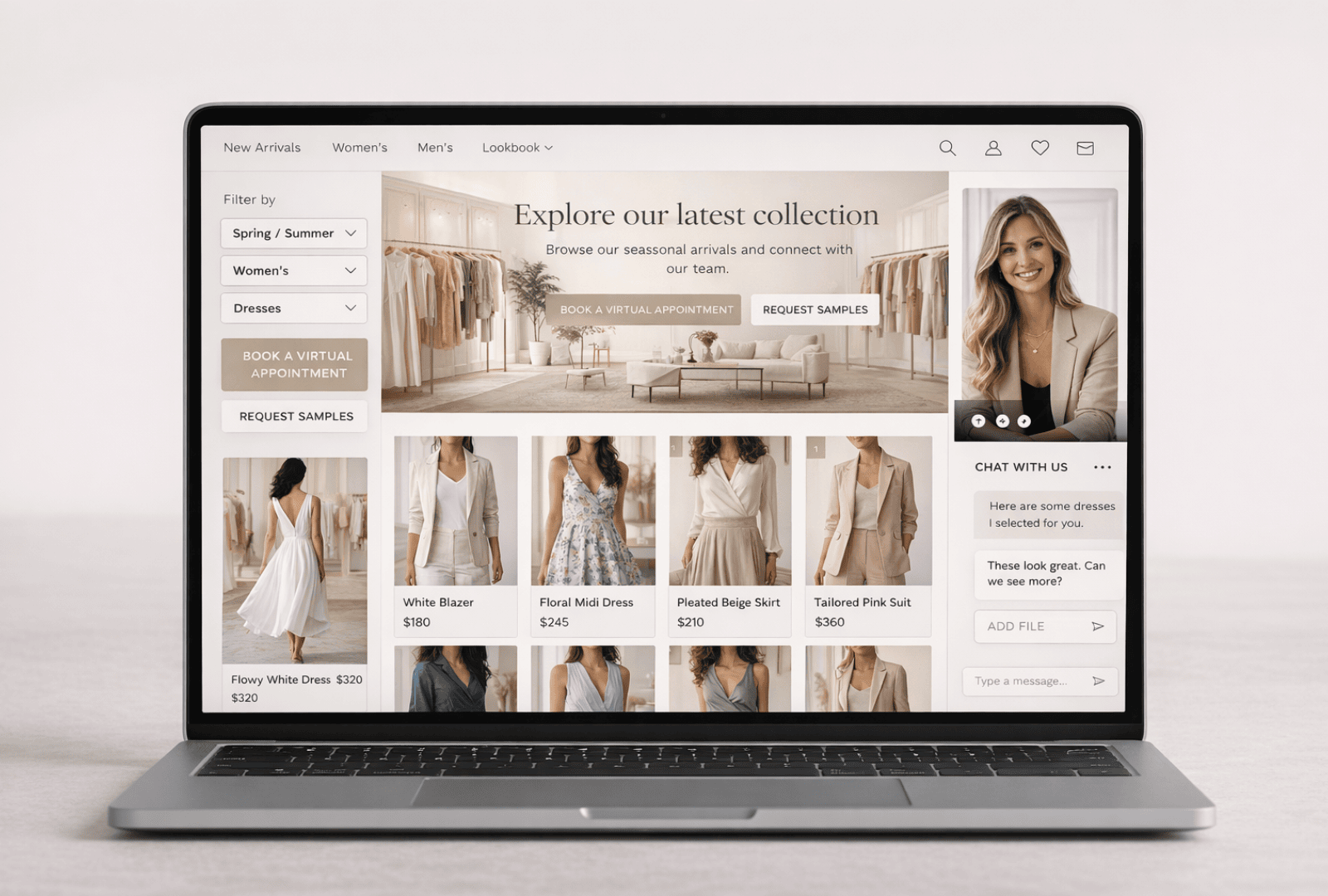
Virtual showrooms are a crucial part of hybrid selling. By replicating the in-person experience online, buyers can explore collections in detail at any time of the day or night, without having to set foot outside of their office.
Not only is this a useful tool for buyers who are unable to travel or attend trade shows, but it’s also beneficial for buyers who want to plan pre-season before they meet brands in person.
For buyers who can’t meet in person, brands can enhance their virtual showrooms by enabling remote appointments and digital line reviews to ensure they secure sales.
Role of Physical Showrooms, Trade Shows, and In-Person Meetings
Physical events such as trade shows and showroom appointments have always acted as hubs for brands to build closer personal relationships with buyers.
These crucial in-person meetings not only facilitate valuable networking, but they also allow buyers to get up close and personal with samples and even take part in fittings, which can greatly influence order decisions.
How Virtual and Physical Experiences Work Together
In an ideal hybrid selling journey, a combined approach replaces isolated channel experiences.
For example, a retailer will discover new collections online through virtual showrooms, and then review samples in person at a trade show or during an appointment. When they are ready to place an order, they can do so digitally, either via an app on a tablet hosted by a brand, live from the trade show, or on a B2B platform after they have left the event.
Post-meeting follow-ups can then happen through digital platforms to ensure orders are correct and to continue nurturing the brand-buyer relationship.
Benefits of Hybrid Selling for Fashion Brands
Hybrid selling greatly improves the buying experience by offering buyers increased inventory visibility and more streamlined processes. This, in turn, improves sell-through rates and creates faster order cycles for brands.
Combining digital and physical experiences allows brand sales reps to work more efficiently and cover more areas, increasing brand loyalty, reducing sales friction, and maximizing revenue.
FAQs
How is hybrid selling different from omnichannel retail?
Omnichannel retail refers to a unified system, such as a B2B platform like JOOR, where all wholesale buying and selling between brands and retailers takes place. Hybrid selling, on the other hand, simply refers to the approach of buying and selling wholesale fashion both digitally and in-person.
Why are in-person experiences still important in hybrid selling?
Connecting and networking with buyers in-person is crucial for relationship building in wholesale fashion. Brands that have the chance to meet with buyers at trade shows or during showroom appointments can really nurture business partnerships and showcase their samples in a way that can’t be replicated online.
How does technology enable hybrid selling in fashion?
Tech tools such as virtual showrooms and digital linesheets make hybrid selling easier for brands, as they allow buyers to review their collections and place orders online 24/7 from anywhere in the world.
What role does personalization play in hybrid selling?
Using data that has been captured from digital touchpoints allows brands to create personalized in-person selling experiences for buyers, such as purchase history-based recommendations and highly tailored assortments.
Can hybrid selling improve inventory management?
Hybrid selling gives brands access to data-driven insights, which they can then use to produce more accurate inventory based on demand rather than projections alone.


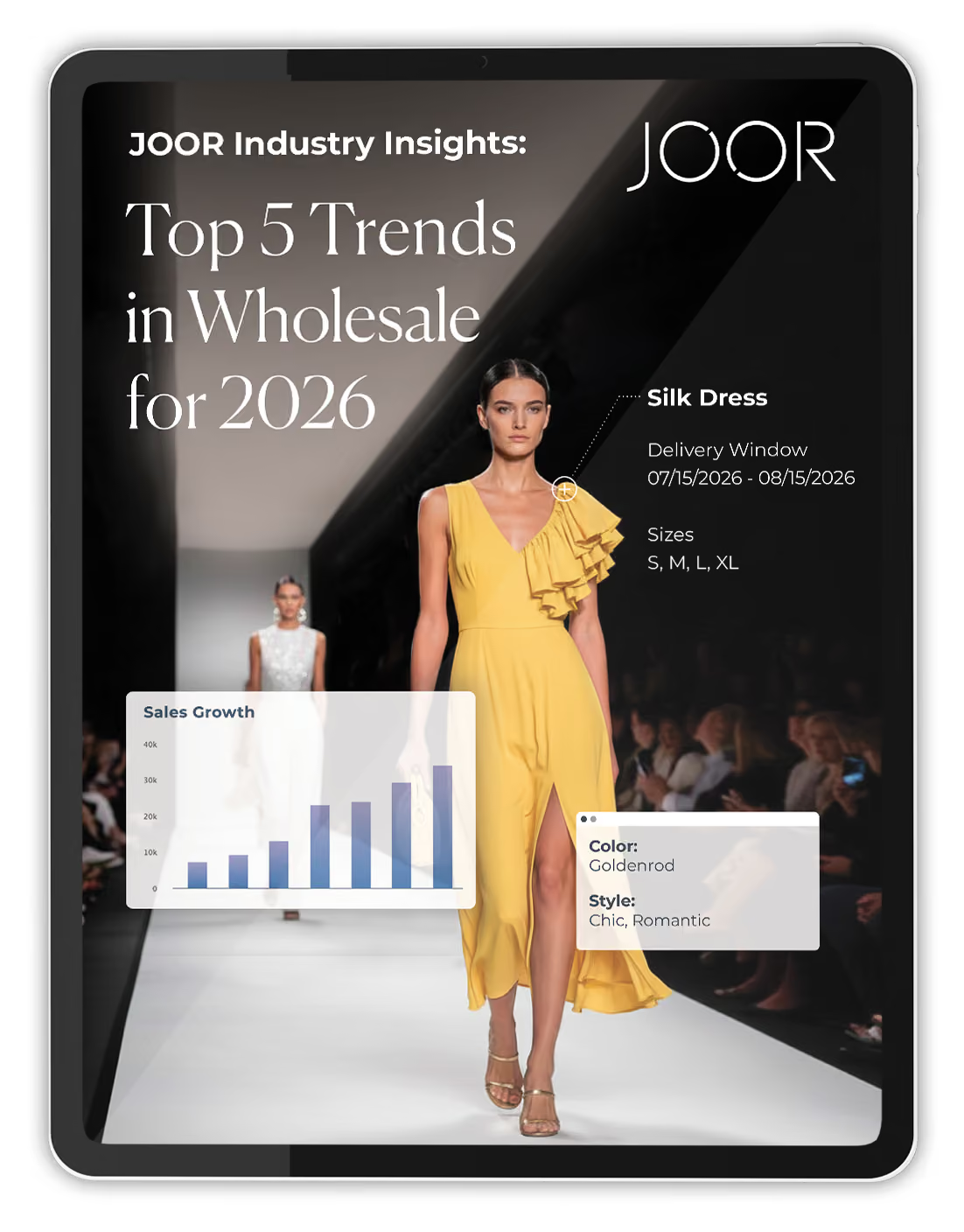
Discover the Top 5 Trends in Wholesale for 2026
Related Insights
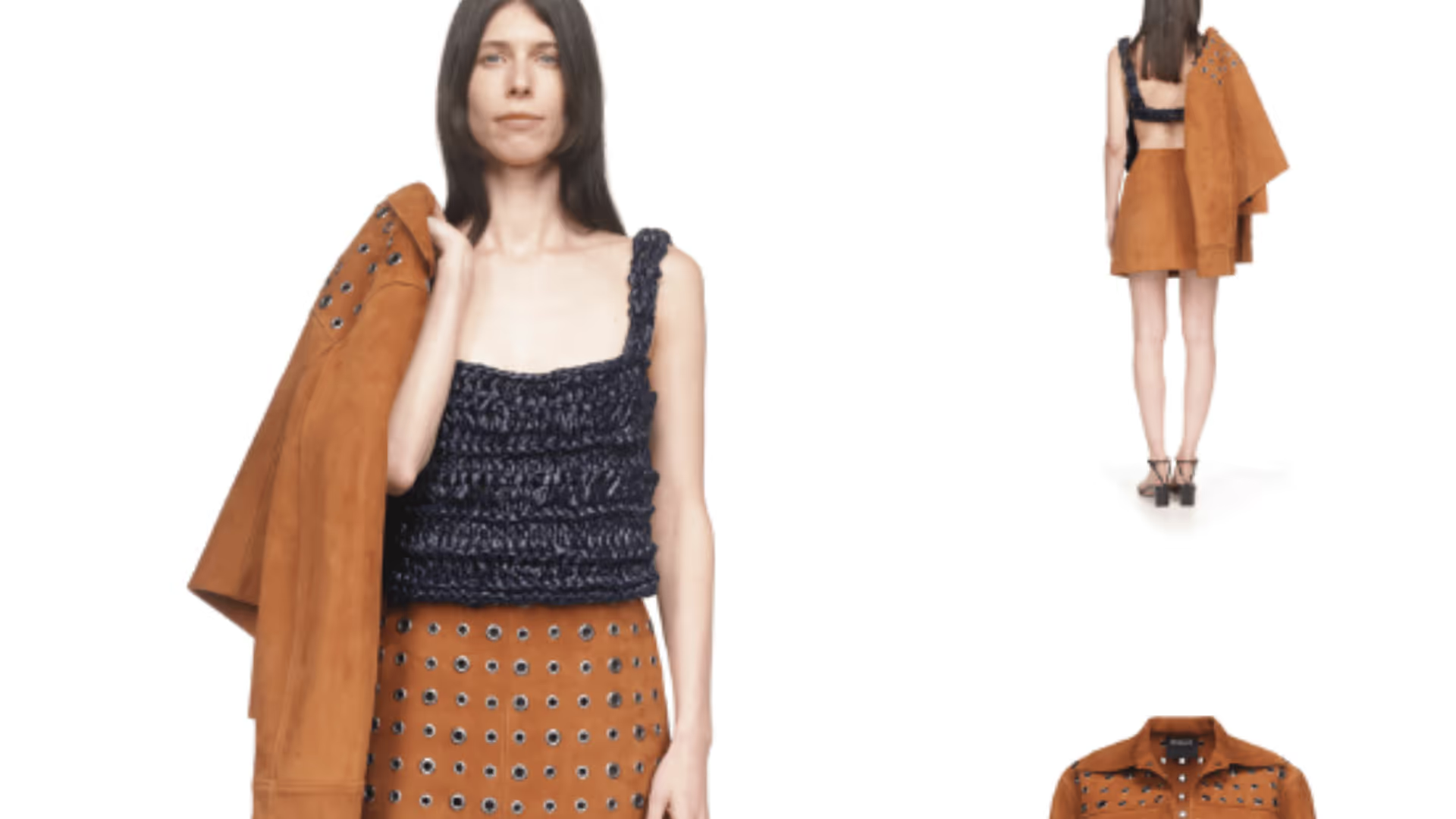
The Cost and Time Savings of 2D Photography with ORB
Save time and money by shooting your fashion photography using JOOR & ORDRE’s 2D Photography Integration.
%2520-%2520Virtual%2520vs%2520Catwalk.avif)

%2520(2)%2520(1).avif)
8 Ways a B2B Fashion Marketplace Solves Wholesale Scaling Challenges
Learn how a B2B fashion marketplace like JOOR helps your wholesale fashion brand overcome scaling challenges. Maximize resources, build retailer relationships, and enhance distribution to drive growth in the global wholesale fashion market.
B2B E-Commerce Portals Explained
Explore how wholesale ecommerce portals can help drive your business growth in this comprehensive guide. Learn about the many benefits brands and retailers can gain from a dedicated platform and the impact it can have on your business.

B2B vs. B2C Fashion Marketplaces: Key Differences for Brands
Understand the key differences and similarities of B2B and B2C fashion marketplaces in this comprehensive guide. Compare their benefits and learn more about their unique offerings to help decide which avenue your fashion brand should pursue.