

For buyers, having the right assortment of products is of utmost importance. A balanced and well-rounded assortment offering customers a variety of curated options ensures the best chance of sales, while an unbalanced assortment that is too focused on trend-led items or product that is misaligned with the target customers' needs could spell retail disaster.
The most successful buyers are, of course, the ones who can strategically plan assortments, so it makes sense that a McKinsey study revealed that 58% of fashion executives claimed assortment planning was a key area for their expanded use of data and analytics. There is a clear demand for intuitive tools to help buyers achieve greater wholesale success, and visual assortment planning should be top of the list.
What Visual Assortment Planning Means in Fashion

Visual assortment planning is the process of building an assortment visually rather than just relying on style numbers and written product descriptions. Leveraging product imagery makes it easier for buyers to imagine how garments may be displayed alongside each other in-store, identify potentially duplicative styles, and determine which styles are needed to make an assortment cohesive and maximize sales.
While merchandising involves assortment breadth and managing product availability and inventory levels, assortment planning is a specific component of merchandising. It focuses on selecting specific SKUs, colors, and sizes for specific locations to meet demand.
The visual element of assortment planning is particularly important for retail, as so much of fashion sales relies on the aesthetic nature of clothing and how the overall in-store experience appeals to customers.
How Fashion Buyers Traditionally Plan Assortments
Traditionally, fashion buyers plan their assortment leveraging line sheets and SKU lists. They usually have a set budget for each category and pull products from different categories to build out their mix.
Fashion buyers will take their time to decide which garments they would like to order from a brand, with this information then being captured on separate orders with each vendor resource.
Limitations of Non-Visual Planning
As well as being more time-consuming, non-visual planning means products are evaluated in isolation. This can make it much harder to spot overlapping or similar garments and can lead to an imbalance in the category mix.
With no way to visually see the assortment being built, buyers have to rely on memory or manual notes they have made, which can often lead to a mismatched mix that can affect sales.
What Makes Visual Assortment Planning Different?

Visual assortment planning is faster, more efficient, and more intentional than traditional methods.
Seeing Products Together Instead of Separately
Being able to view deliveries, categories, and color stories across all brands makes it much easier to achieve balance in an assortment and ensure the mix is completely complementary.
Seeing an assortment visually laid out also makes it quicker for buyers to group products together to help drive impulse purchases and add-ons.
Understanding Context At a Glance
The ability to see all products from an assortment in one place gives the mix context and increases a buyer’s confidence in their selection. If an assortment looks visually appealing, buyers will have more faith in its ability to achieve their desired sales goals, as so many consumer fashion decisions are inherently visual.
When Is Visual Assortment Planning Used?
Visual assortment planning can be used at all stages of the buying process.
Before Placing Orders
Visual assortment planning makes it possible to review collections holistically, allowing buyers to explore different brands’ offerings and get inspiration on the direction of their mix before committing to anything.
While Building An Order
If a buyer already has an order in mind, visual assortment planning can be a useful tool to check the balance of their mix in real time, allowing them to adjust their selections early in the buying cycle, reducing overlapping or repetitive products and increasing revenue potential.
After Orders Are Created
Visual assortment planning can also be helpful post-order, where it can be a very useful tool to gain clarity over upcoming deliveries of inventory. It can also play an important role in assisting the in-store visual merchandising process and communicating upcoming products to other internal teams.
Who Benefits From Visual Assortment Planning?
- Independent boutique buyers: visual assortment tools help indies to maximize revenue potential without the need for complex ERP systems, making it easier to scale.
- Multi-store buyers: being able to visualize what product will look like on shelves at each location allows for more targeted assortments and streamlines the ordering process.
- Buying teams and planners: access to a centralized view of assortments enables the entire team to adjust mixes as needed, reducing the time spent on communicating planning updates.
Why Visual Assortment Planning Is Becoming Standard
As mentioned in JOOR’s Wholesale Trends 2026 whitepaper, in-season buying is gaining popularity, and as buying cycles shorten, the ability to build assortments quickly is becoming increasingly important.
With the digitization of wholesale and the influx of modern tools to improve processes, buyers now have higher expectations for precision and are looking to visual assortment planning to provide it.
How Visual Assortment Planning Supports Better Outcomes
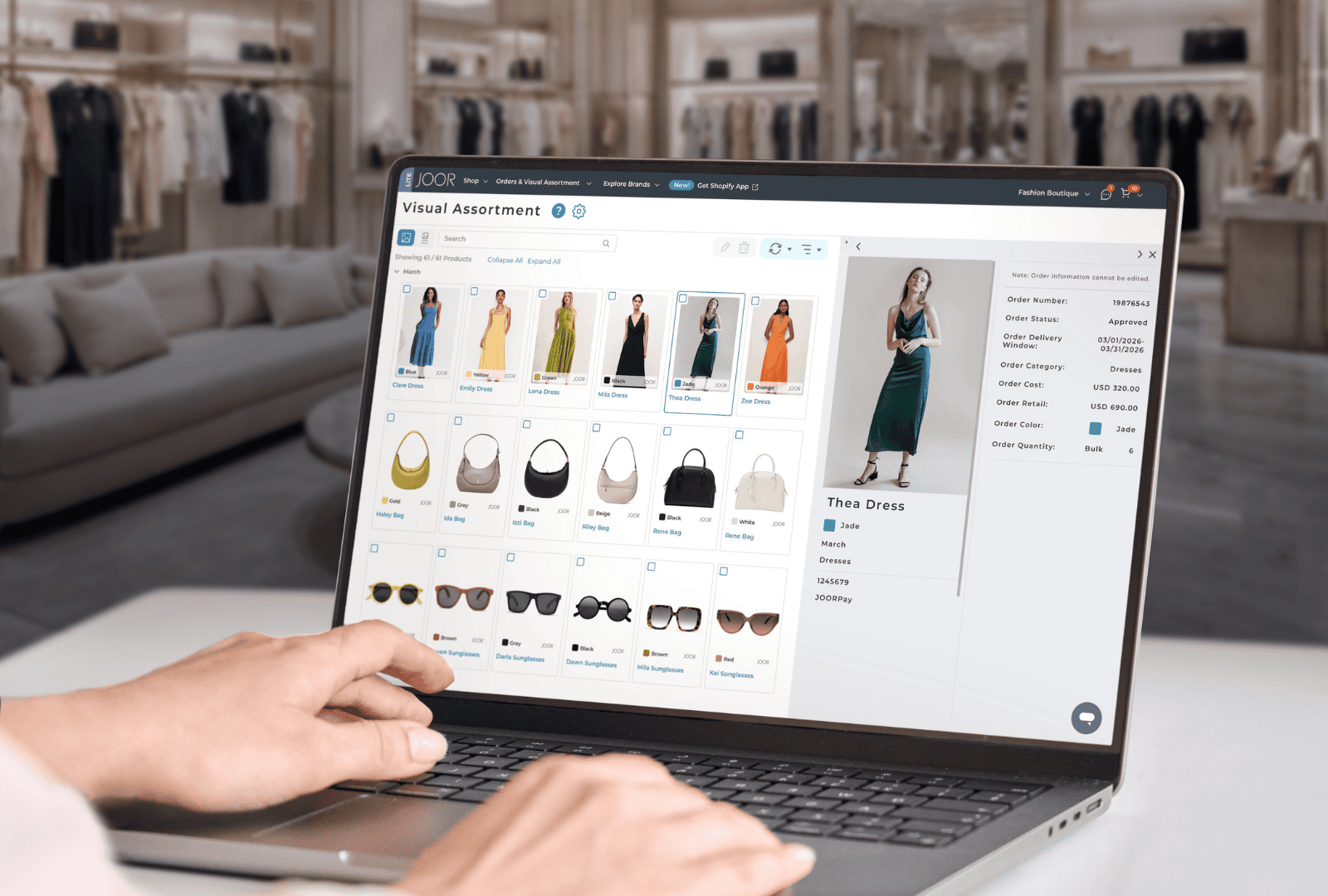
Bringing every product from every order placed into a single, intuitive view saves retailers hours of manual work and also allows for better workflows within internal departments.
Being able to quickly organize and filter products helps buyers gain total clarity over their inventory, preventing overbuying and allowing them to see the exact styles needed to strengthen their assortment, which in turn creates more precise mixes and aesthetically balanced assortments.
JOOR's Visual Assortment tool has been a game-changer for retailers seeking to optimize product selections, organize assortment boards with precision, and aggregate orders placed with multiple brand and wholesale platforms in one place.


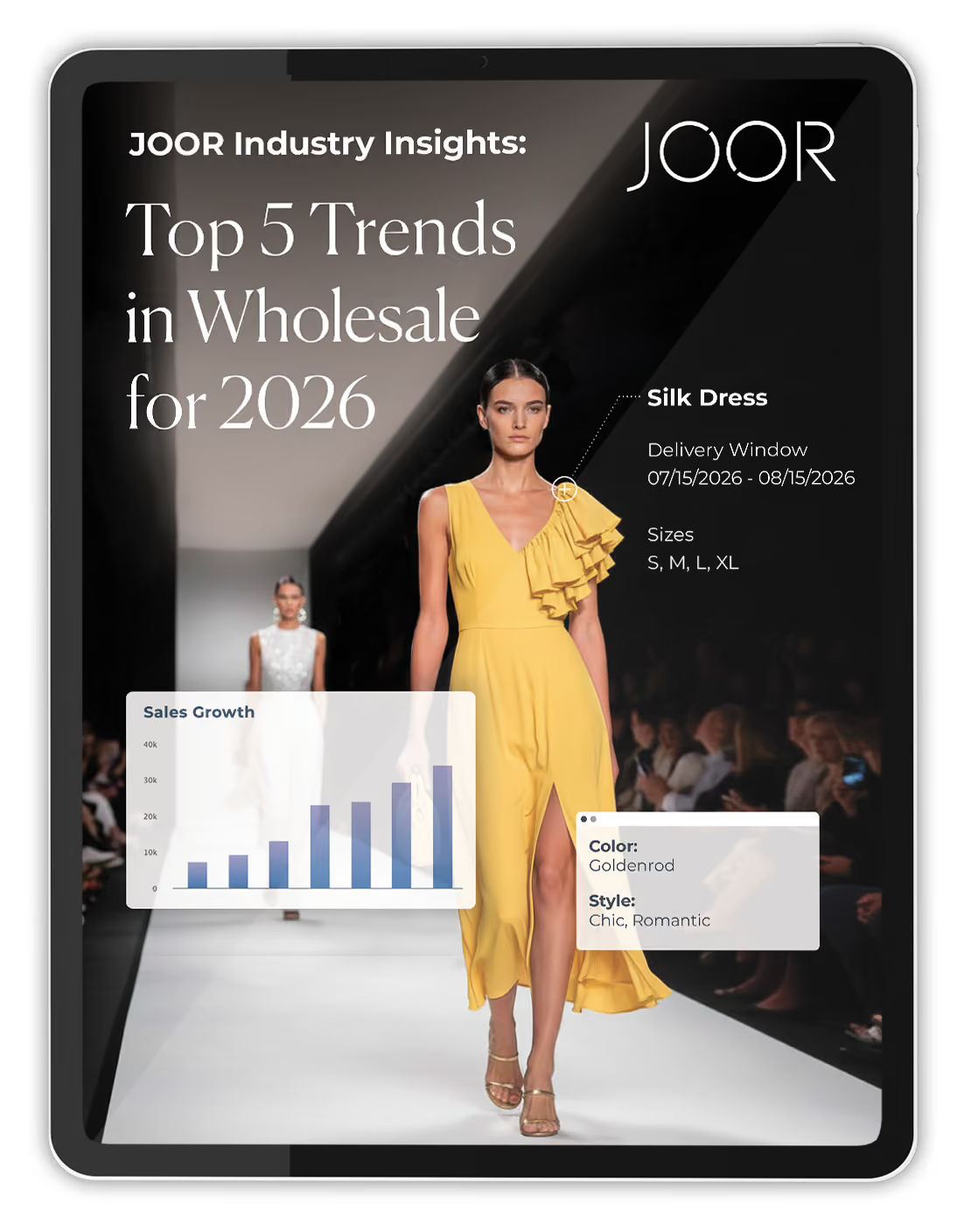
Discover the Top 5 Trends in Wholesale for 2026
Related Insights

How to Measure Trade Show ROI: A Complete Guide to Calculating Event Success
Learn the key metrics that will help you determine whether your in-person wholesale activities are a success and discover how to track long-term progress.
.png)
A Lookback on 2025 at JOOR
Reflect on the insights and innovations JOOR brought to the wholesale industry in 2025, from launching a new first-of-its-kind solution to expanding our global network of fashion brands and retailers.

Why Digital B2B Catalogs are Essential for E-Commerce Businesses
Online catalogs have become a crucial component for retailers and their buyers in an evermore tech reliant industry. Read about how these dynamic product libraries act as comprehensive selling solutions that plug into current buying behaviors.
%2520(1).avif)
How to Use a B2B Fashion Platform to Increase Wholesale Revenue
Learn how to Use a B2B Fashion Platform to streamline wholesale processes, reduce errors, and enhance efficiency for brands and sales directors. Highlighting how these platforms improve compatibility with buyers, reduce admin burdens, increase collection visibility, and boost efficiency and revenue.
.avif)
How Does a B2B Marketplace Work?
Welcome to our comprehensive marketplace guide for fashion businesses. Here, you can find everything you need to know about B2B wholesale marketplaces, from understanding their purpose to how to choose one that best suits your business needs.
The Power of Brand-Retailer Partnerships
Learn how brand-retailer partnerships can be a powerful tool to help drive your fashion company's growth. This guide also details the key elements to consider before engaging in a partnership, and how you can go about making new connections.