Tariff Insights: How Fashion Buyer Confidence Has Returned Internationally
Examine the impact of tariffs on global fashion markets with findings from JOOR transaction data, and learn how you can use these insights to inform your growth for the coming seasons.
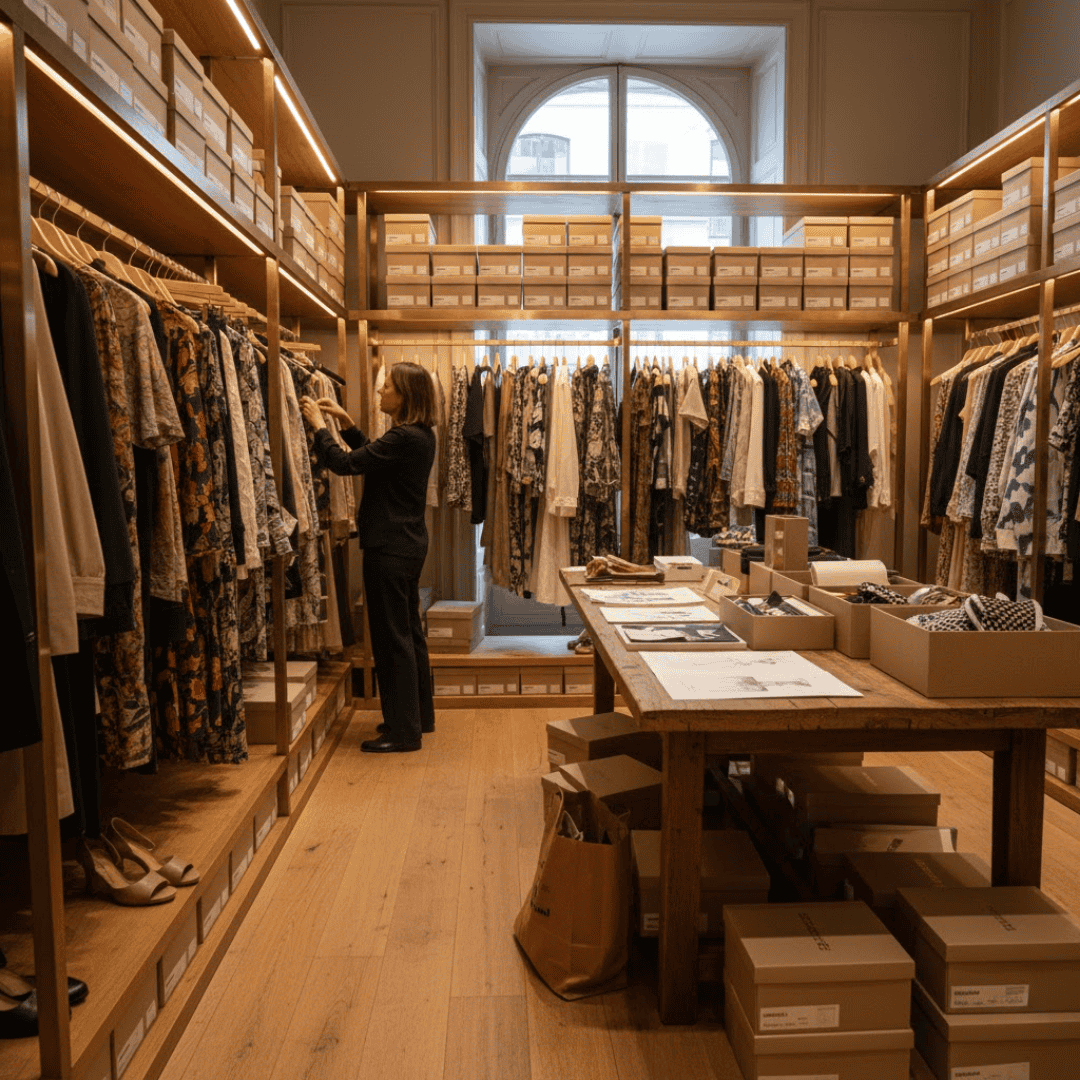

How Have Tariffs Affected the Fashion Industry?
Exclusive JOOR data has identified:
- A Q3 bounce back to buying: Following declines in Q2, buying rebounded +18% in Q3 outside the US
- Prolonged retailer caution in the US: Q3 buyer purchases continue to decline
- Price increases continue: Wholesale prices rose by 5% from Q1 to Q2, and increased an additional 0.5% into Q3
The 2025 Tariff-Led Fashion Price Increase
Following the announcement of US tariffs at the beginning of April, JOOR conducted a comprehensive survey of its extensive global network. It revealed 85% of brands planned to pass on some or all tariff costs via price increases. For retailers, 96% of US-based retailers and 82% of non-US retailers confirmed they anticipated increasing their prices as a result of tariff costs.
These projections proved accurate. When comparing prices of the same styles on JOOR across Q1 to Q2, on average, wholesale prices increased by 5%—a dramatic upward shift from the typical quarterly price adjustment in this timeframe of 0.6%.
The fashion market reaction to US tariffs continued in Q3, where prices rose an additional 0.5%. This increase is particularly notable when compared to the previous three years, when prices from Q2-Q3 were largely flat or down.
The Impact of US Tariffs on Global Fashion Buying
JOOR transaction data from like-for-like retailers year-over-year (YoY) reveals a global decline in Q2 purchases of -5% amidst a backdrop of price increases. Following this pullback in Q2, non-US retailers rebounded in Q3 with an +18% uplift in purchases YoY, as international retailers started returning to their usual buying habits.
One country experiencing particular growth is Italy, where Q3 orders are up 40%. We recently reported on the Italian fashion market’s return to growth, with JOOR data revealing retailers in the region are increasing their spend with GMV +17% in 2025 YTD.
Other markets showing pronounced Q3 growth include:
- Germany: +29%
- South Korea: +29%
- United Kingdom: +22%
Collectively, these regions indicate that demand for newness and product differentiation remains strong, even within shifting cost environments.
How Tariffs Affected Wholesale Fashion in the US
In contrast, US buyers are exhibiting sustained caution with Q3 retailer purchases continuing to decline, falling 10% YoY. It seems many fashion buyers may still be finding demand forecasting an area of difficulty and are acting conservatively to avoid finding themselves saddled with excess inventory.
A common strategy emerging is the prioritization of selling through existing stock and of wanting to place in season orders closer to delivery. This demonstrates that retailers are emphasizing liquidity, inventory turnover, and reduced exposure to pricing volatility.
Post-Tariff Fashion Growth
As we move into 2026, we anticipate a continued expansion across international markets, driven by retailers who are adapting quickly to new cost structures and recalibrated pricing expectations. Independent retailers in particular, who offer highly curated and often specialized assortments to extremely loyal customer bases, will continue to thrive.
Brands looking to expand into new markets and seek out new independent partners can use JOOR to make business connections with retailers of all sizes across the globe.
In the midst of market fluctuations in the US, both brands and retailers in the region will need to be more considerate in their approach to business. Using a b2b wholesale platform like JOOR makes it easier to communicate key changes to your pricing, highlight available-to-sell opportunities, and display tariff-related information in an easy-to-understand way to help make your position clear for the best chance of driving growth in 2026 and beyond.
As changes in the retail landscape continue to unfold, JOOR is a valuable tool that can help give brands and buyers the best chance of wholesale success. Request a demo to learn more.
.avif)

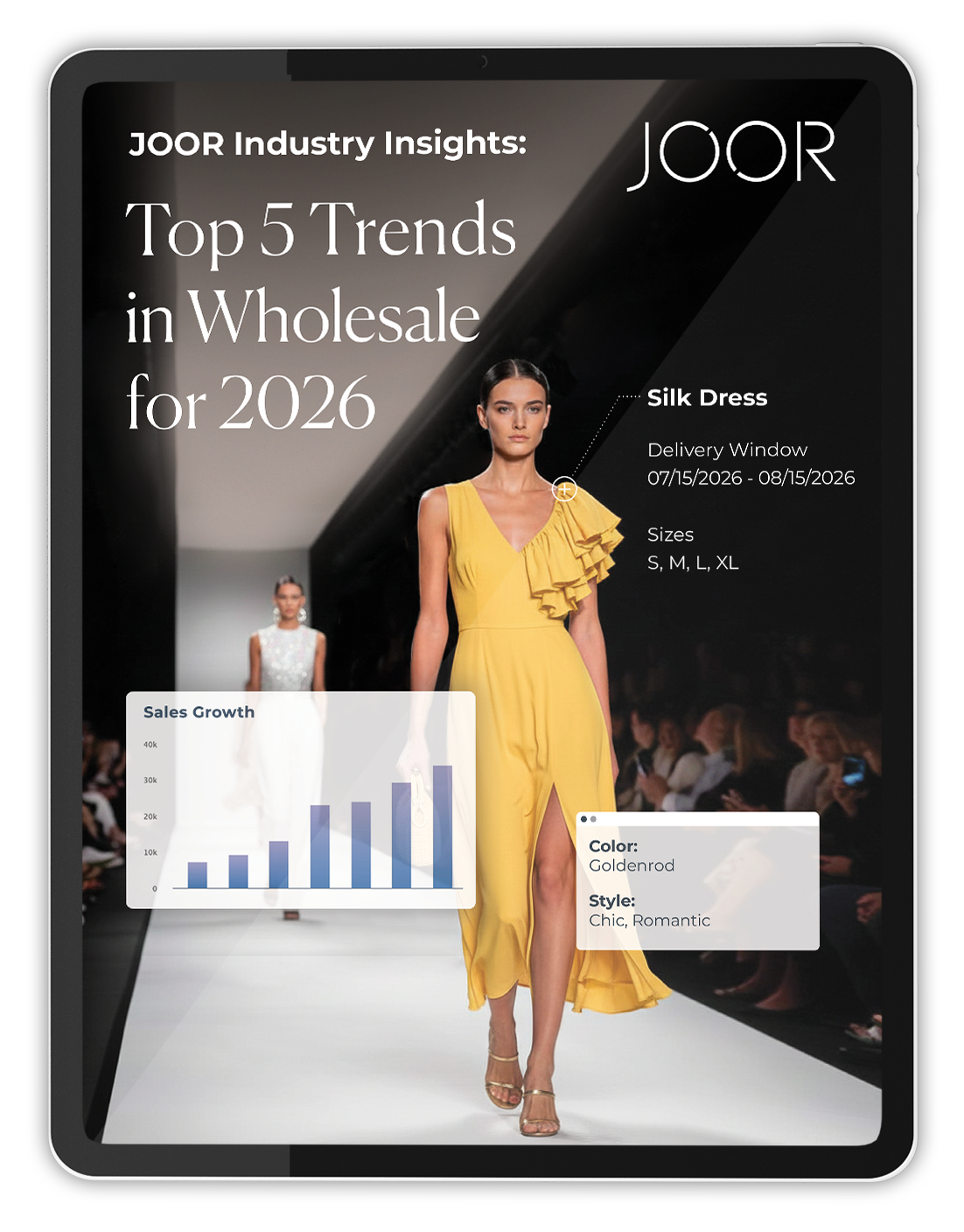
Discover the Top 5 Trends in Wholesale for 2026
Related Insights

How to Measure Trade Show ROI: A Complete Guide to Calculating Event Success
Learn the key metrics that will help you determine whether your in-person wholesale activities are a success and discover how to track long-term progress.

Why Digital B2B Catalogs are Essential for E-Commerce Businesses
Online catalogs have become a crucial component for retailers and their buyers in an evermore tech reliant industry. Read about how these dynamic product libraries act as comprehensive selling solutions that plug into current buying behaviors.
%2520(2)%2520(1).avif)
8 Ways a B2B Fashion Marketplace Solves Wholesale Scaling Challenges
Learn how a B2B fashion marketplace like JOOR helps your wholesale fashion brand overcome scaling challenges. Maximize resources, build retailer relationships, and enhance distribution to drive growth in the global wholesale fashion market.
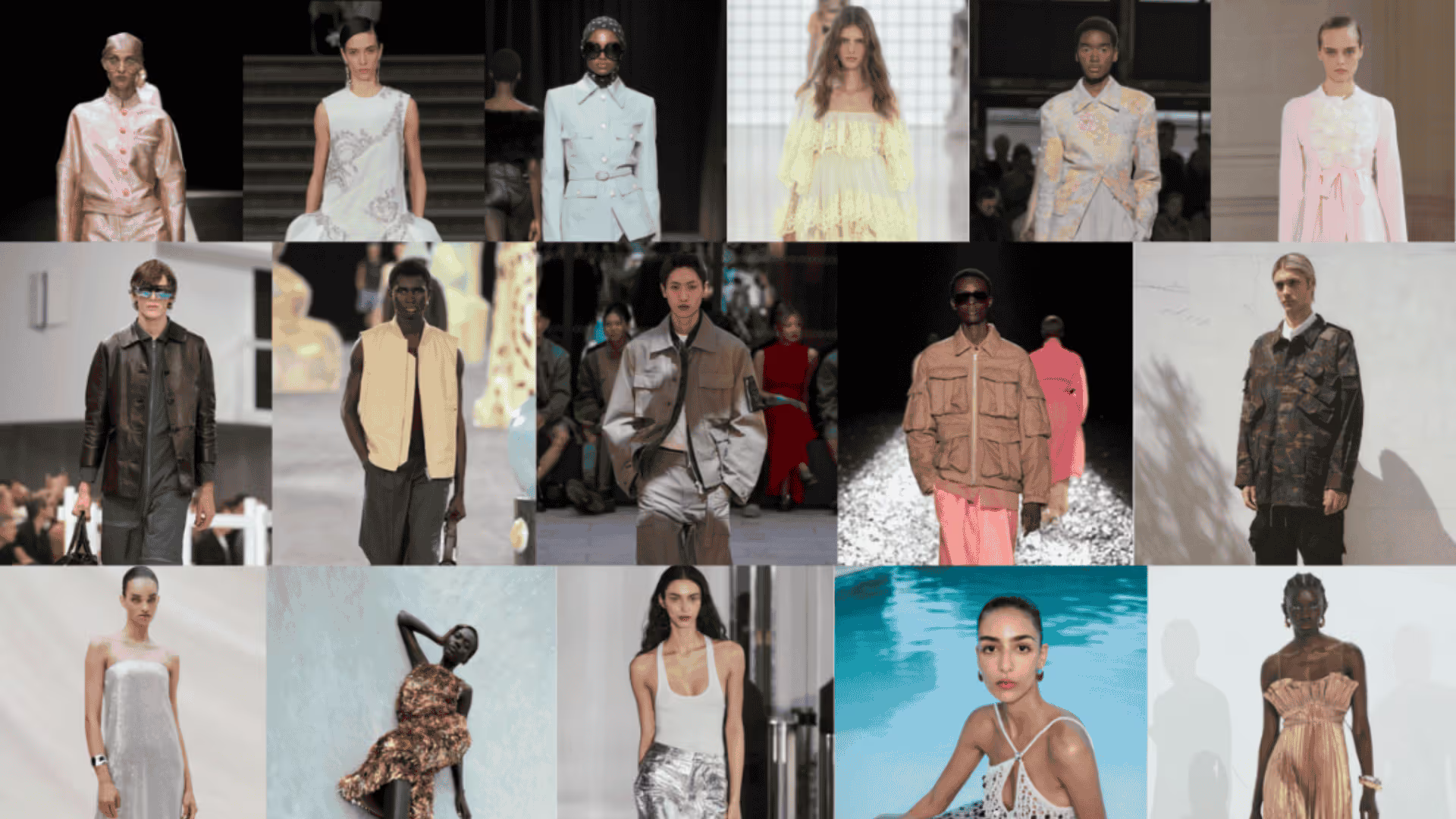
2026 Fashion Trend Report
Uncover the must-know fashion trends due to be released throughout 2025 with JOOR's exclusive Fashion Trend Report. With appearances from Men's & Women's Spring 2025, Resort 2025, and Fall//Winter, dive into each seasons styles and shop the collections on JOOR Passport - where runway inspiration meets wholesale buying.

Top 5 Trends in Wholesale for 2026
Future-proof your fashion business with our wholesale trends forecast. Explore the industry shifts, buying patterns, and brand behaviors we predict will shape the industry in 2026 and learn data-driven industry insights with our free-to-download Wholesale Trends 2026 whitepaper.
8 Ways a B2B Fashion Marketplace Solves Wholesale Scaling Challenges
Learn how a B2B fashion marketplace like JOOR helps your wholesale fashion brand overcome scaling challenges. Maximize resources, build retailer relationships, and enhance distribution to drive growth in the global wholesale fashion market.